Article
Changing your residency from California: Considerations and alternatives
June 8, 2021 · Authored by Bob Reynolds, Chris Parker
Newly untethered remote workers and business owners are taking advantage of the ability to work anywhere — moving to locations that better align with personal financial goals and lifestyles. California ranked second in outbound-migration volume in 2020 as people weighed the cost of living, tax rates, and quality of life with alternatives, according to CNN.
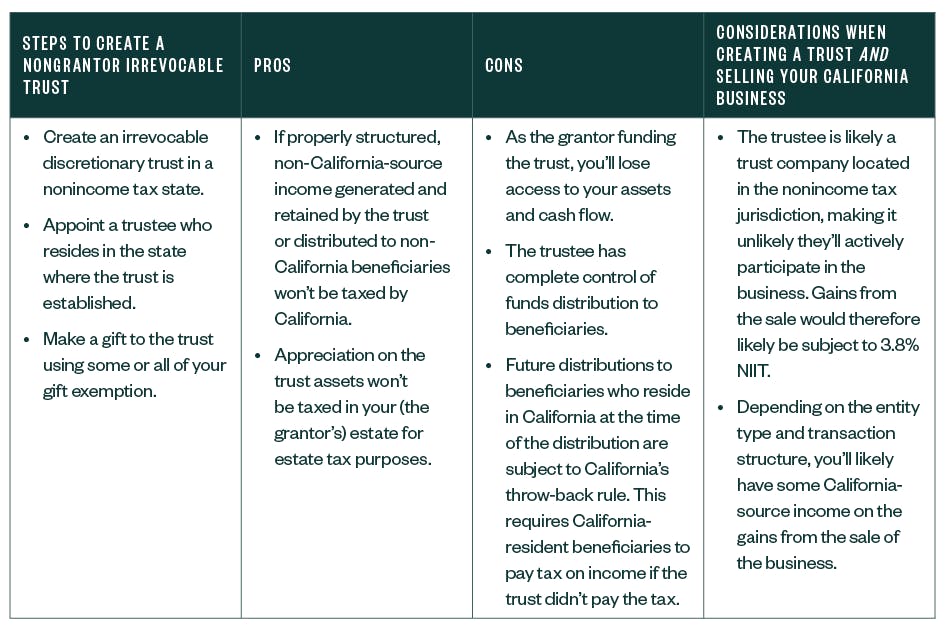
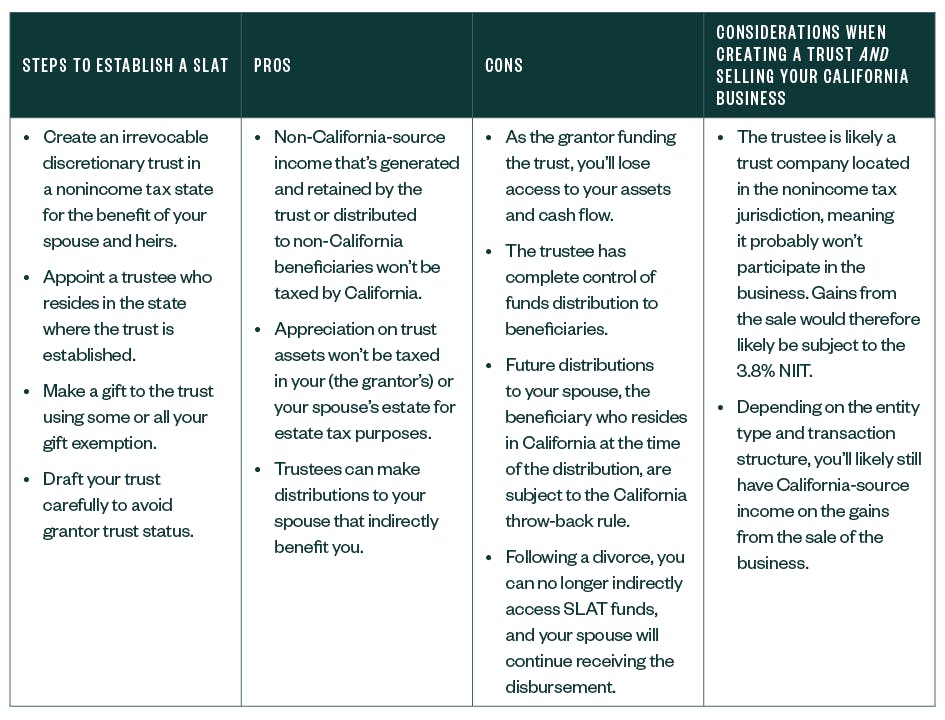
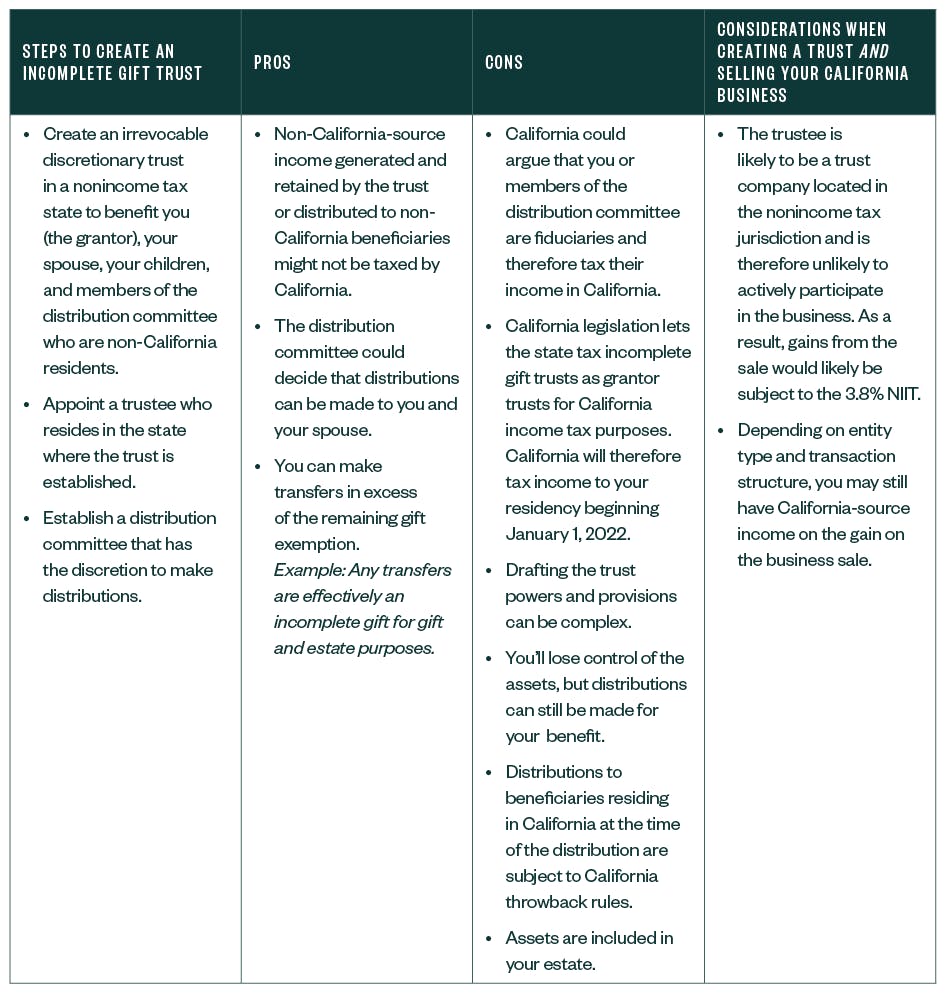
If you’re considering a residency transition for financial reasons, there are many options available. These range from a complete out-of-state move to transferring assets to a non-California trust.
Based on your needs, these changes can be complex — especially if they accompany an anticipated liquidity event, such as a business transfer. This makes estate planning, financial planning, and state income-tax planning critical to your overall success.
It also means you can benefit from carefully and thoughtfully analyzing your goals and putting the right advisors in place to help you achieve them.
Below, gain insight into several different residency transition options and alternatives, including pros, cons, and implications of each.
Transfer your residency from California
Perhaps the most straightforward option to align your financial goals and lifestyle is to change your primary residency by moving out of California.
When considering this option, it’s important to note the importance of intent. While individuals can have many homes in many states, a residency transition is a shift in your true, fixed, and primary residence.
To avoid any complications, it’s key to fully understand the unique state requirements for establishing your new residency.
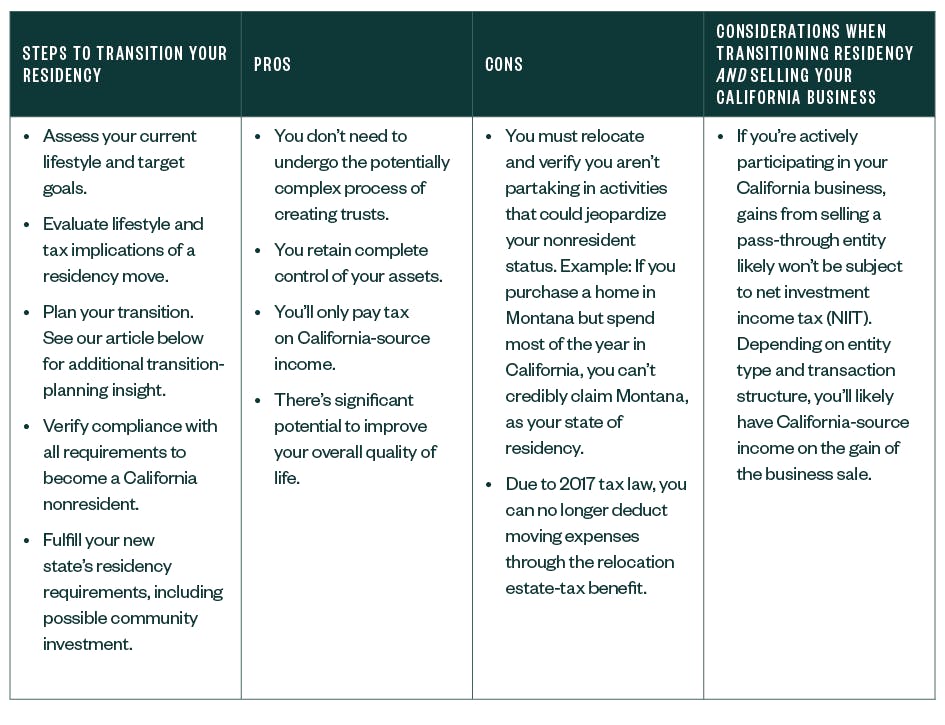
For more information on how to plan your transition, read our article: Out-of-state residency transitions: Tax planning for individuals and trusts


Related sections
The information provided here is of a general nature and is not intended to address the specific circumstances of any individual or entity. In specific circumstances, the services of a professional should be sought. Tax information, if any, contained in this communication was not intended or written to be used by any person for the purpose of avoiding penalties, nor should such information be construed as an opinion upon which any person may rely. The intended recipients of this communication and any attachments are not subject to any limitation on the disclosure of the tax treatment or tax structure of any transaction or matter that is the subject of this communication and any attachments.