Article
An FAQ on California’s proposition 39 and how it affects school districts
Oct. 11, 2021 · Authored by Stephen Bacchetti, Nick Marinovich of California Association of Bond Oversight Committees
Construction bond programs are often the largest expenditure of a district’s capital and operating budget. With bond program costs ranging from millions to several billion dollars, citizens and stakeholders want to know where and how funds are spent.
High-profile, high-dollar projects — such as infrastructure upgrades, upgrades to schools, and athletic facilities — likely receive extra scrutiny from the organization, the media, and the public.
Common program pitfalls might include project charges not specifically addressed in the ballot language and cost overruns resulting from ineffective procurement practices, schedule delays that impact operations, or penalties for noncompliance with state or federal regulations. Expertise in construction programs and the related controls aren’t typically core competencies for school districts and the individual departments within them.
Understanding California Proposition 39, the accountability requirements, and best practices is essential to support a successful bond program. In the following, you’ll find details on the following questions:
- What is California proposition 39, also known as the school facilities local vote act of 2000?
- What are accountability requirements for proposition 39?
- How does the citizens oversight committee requirement for proposition 39 affect school districts?
- What are annual performance and financial audit requirements for proposition 39?
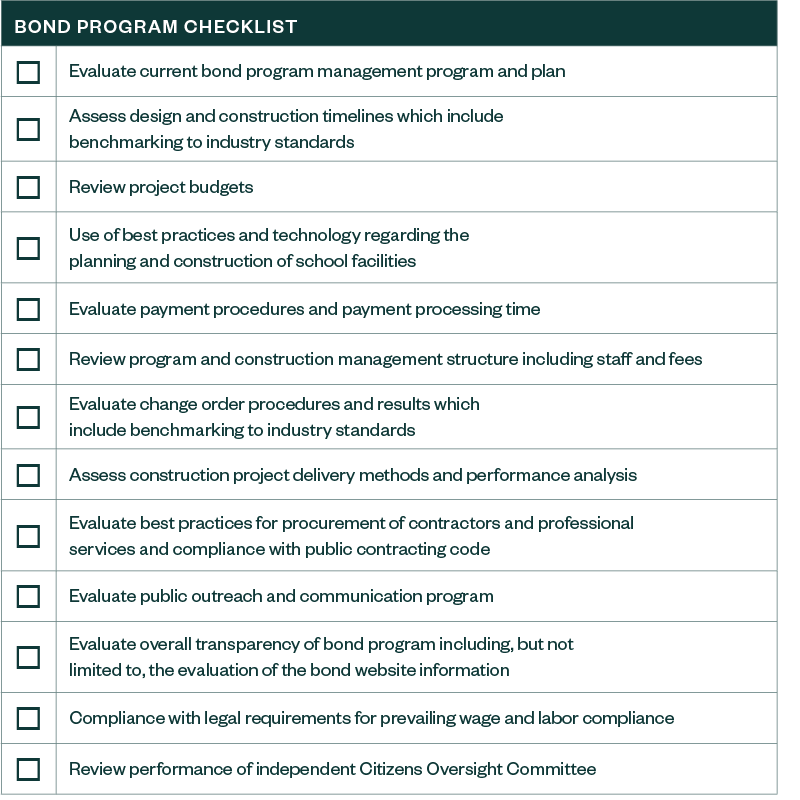
- Next steps: A proposition 39 checklist and finding an auditor
What is proposition 39?

Related sections
The information provided here is of a general nature and is not intended to address the specific circumstances of any individual or entity. In specific circumstances, the services of a professional should be sought. Tax information, if any, contained in this communication was not intended or written to be used by any person for the purpose of avoiding penalties, nor should such information be construed as an opinion upon which any person may rely. The intended recipients of this communication and any attachments are not subject to any limitation on the disclosure of the tax treatment or tax structure of any transaction or matter that is the subject of this communication and any attachments.