Article
Combat climate change in real estate with energy efficient tax incentives
April 25, 2022 · Updated July 10, 2023 · Authored by Kelvin Tetz, Kyle Sund, Laura Theiss, Matt Lord
A previous version of this article was published on April 20, 2022, by the Portland Business Journal.
Reducing energy consumption in the real estate sector is one way to help mitigate the impacts of long-term climate change. Tax benefits are available to companies that construct and design qualifying energy-efficient buildings.
For real estate developers and investors, there’s a plethora of cost-saving opportunities as a result of the Inflation Reduction Act of 2022, which are intended to incentivize the construction of energy-efficient buildings.
Real estate developers and owners, as well as designers of certain building types, could stand to benefit from these tax credits and incentives on both past and current construction projects.
Specifically, there are two incentives to explore for qualifying developments:
- Internal Revenue Code (IRC) Section 45L tax credit. The IRC section 45L new energy efficient home credit was increased and modified starting in 2023 and extended through 2032. This may be particularly beneficial to residential multifamily developers and single-family home builders.
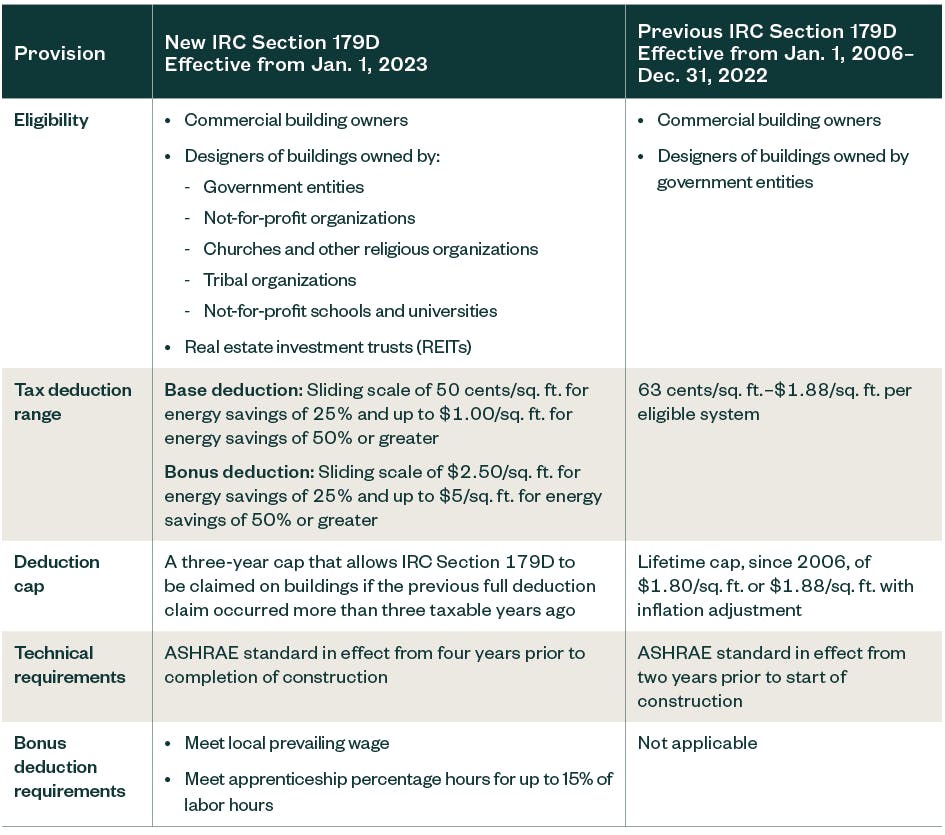
- IRC Section 179D deduction. The IRC section 179D energy-efficient commercial building deduction was dramatically increased, making it especially impactful for the architecture, engineering, and construction industries as well as commercial and residential rental building owners.
Impacts of Inflation Reduction Act on IRC section 45L tax credit
This credit provides incentives for residential homebuilders and multifamily developers to reduce energy consumption in newly constructed residences by offering a per dwelling unit tax credit up to:


The information provided here is of a general nature and is not intended to address the specific circumstances of any individual or entity. In specific circumstances, the services of a professional should be sought. Tax information, if any, contained in this communication was not intended or written to be used by any person for the purpose of avoiding penalties, nor should such information be construed as an opinion upon which any person may rely. The intended recipients of this communication and any attachments are not subject to any limitation on the disclosure of the tax treatment or tax structure of any transaction or matter that is the subject of this communication and any attachments.