Article
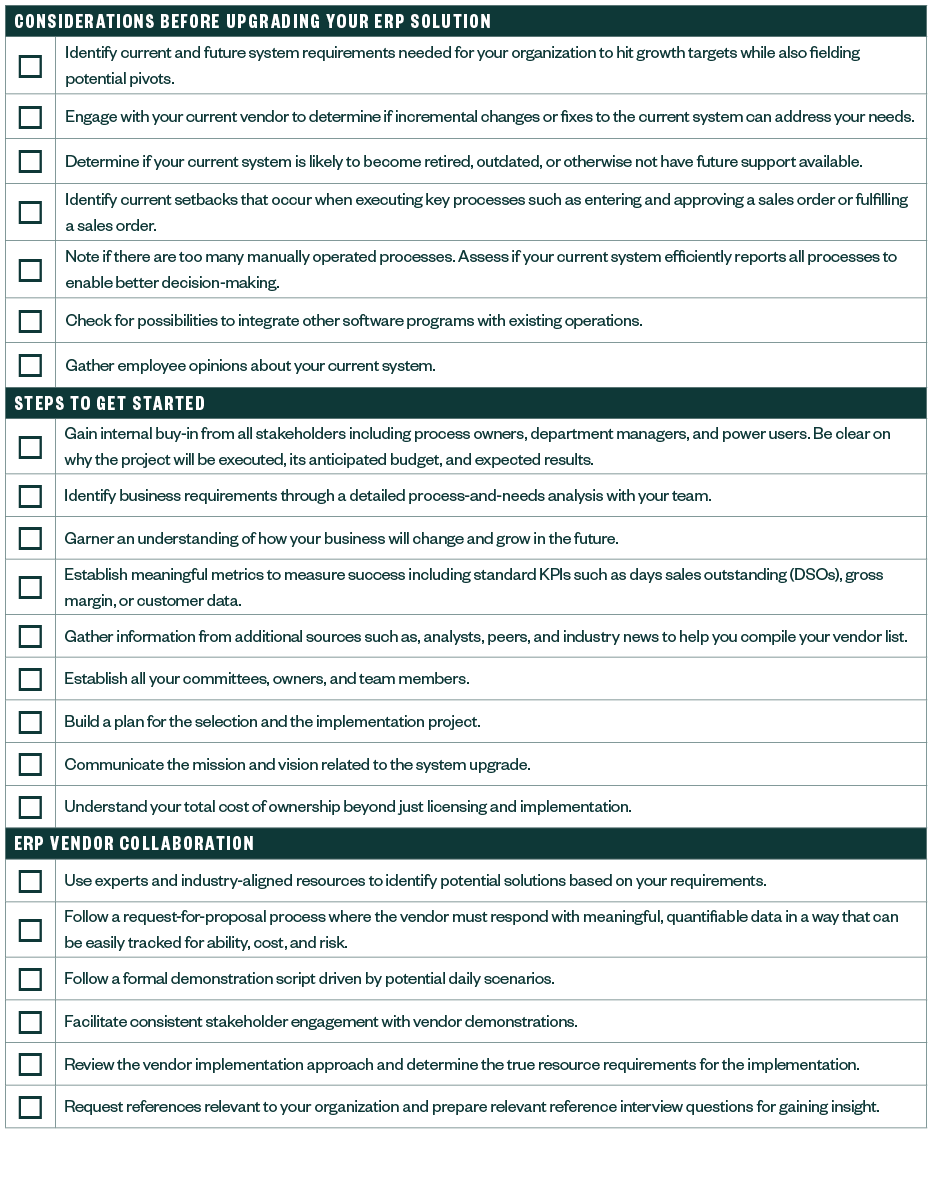
Checklist for determining when it’s time for a new ERP solution
April 19, 2022 · Authored by Chuck Andrews, Michael Parker
Finding an opportune moment for upgrading your Enterprise Resource Planning (ERP) solution can be challenging. Your strategic business goals — often reactions to a steep inflection point in demand or sales — should, however, dictate the timing of your ERP software renewal.
Consider the long-term trajectory of your enterprise, not just immediate needs, and ask the right questions when updating enterprise IT systems, such as:
- What markets do you plan to enter?
- What pivots are on the horizon?
- How will your capital structure change?
- What acquisitions may occur?
Addressing foundation-shifting questions like these is the first in many steps to formalizing a plan to upgrade critical business systems. The checklist below could help you decide if it’s time for your organization to consider an upgrade, and if so, initial steps to take and ways to solicit a vendor.
What are the benefits of replacing your ERP solution?
An updated ERP accounting system can be a tool for assessing key considerations about your organization and help:
- Increase security and meet compliance standards
- Avoid outdated technology that prevents ability to scale or integrate with other programs
- Bypass reporting issues to report on all processes and enable better decision-making
- Provide access to real-time financial data and insight for key performance indicators (KPIs)
- Enhance automation and workforce management
- Improve budgeting and financial planning
- Save money and resources