Article
Establishing governance and internal controls over ESG reporting
Sept. 18, 2023 · Authored by Madison Poitras, Daniela Lundin, Spencer Roundy
On March 6, 2024, the SEC issued a final rule requiring registrants to disclose climate-related information in their registration statements and annual reports. See additional details in the alert, SEC finalizes climate disclosure rule, published March 12, 2024.
Environmental, social, and governance (ESG) reporting is becoming a top priority as organizations understand the benefits related to ESG strategies ranging from long-term value creation to lowered compliance costs.
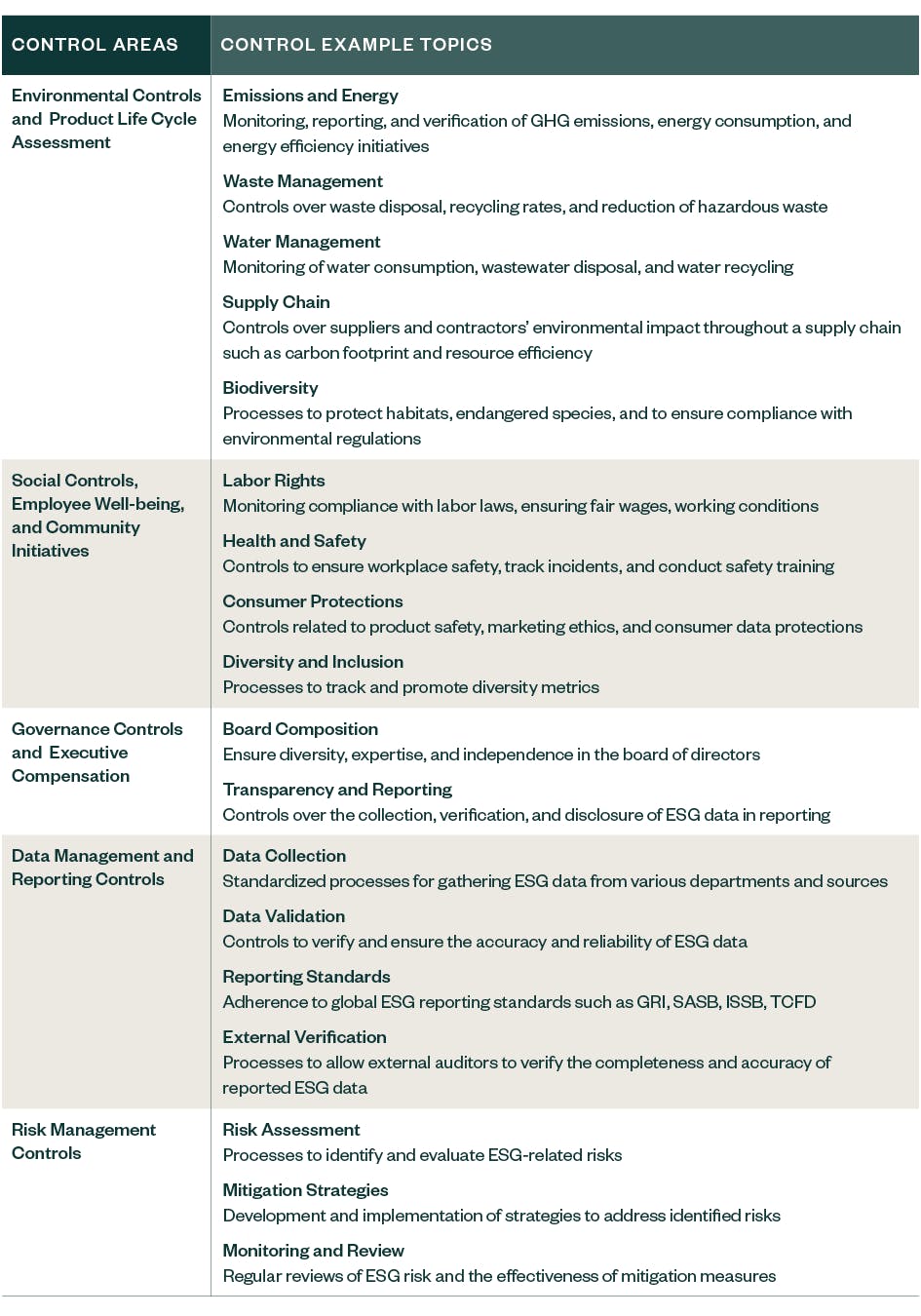
Management boards increasingly demand strong governance structures and internal controls over ESG data. Organizations are designing and implementing controls over the collection, review, and reporting of sustainability and ESG information.
Establishing effective governance over internal controls isn’t a one-time task but a continuous process that requires commitment.
This article covers:
What is ESG?
The categories that comprise ESG — environmental, social, and governance — provide an opportunity for organizations to evaluate their impact on, and position in, a society that wants sustainability. ESG is a set of factors that American businesses use to capture and communicate decision-useful information to investors, lenders, shareholders, and stakeholders.