
Article
How to make your Tribe a high-performing organization
Aug. 25, 2015 · Updated Nov. 3, 2021 · Authored by Mark Steranka, Tasha Repp
The differences between Tribes across the United States are as expansive as those between the most diverse cities, counties, states, not-for-profits, or businesses.
Tribes range from urban to rural, from complex to relatively simple, from large Tribal enrollment to smaller, and from financially successful to struggling. These differences contribute to a present in which some Tribes benefit from sizeable gaming operations or significant natural resources while others rely primarily on federal funding.
Regardless, every Tribe can improve its performance — and every Tribe can be a high performer. There are four attributes that all high-performing organizations share, and Tribes and their businesses are no exception:
- A clear plan for moving forward
- A focus on performance measurement
- A strategy for cultivating and compensating employees
- A commitment to communication
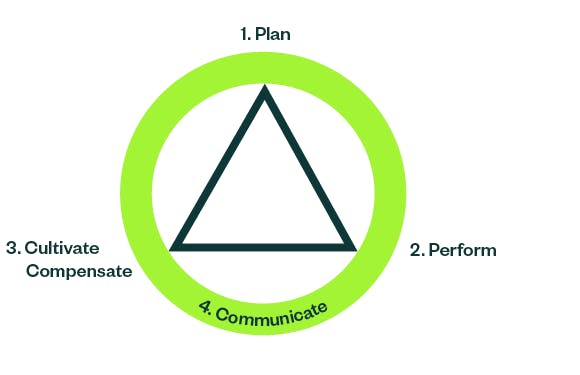
A key to success is achieving alignment between these four elements as shown above. Let’s take a closer look at each of these four attributes.
Planning
Every Tribe should be guided by a strategic plan, which defines a road map for moving from point A to point B.
The plan should reflect a long-term vision to guide strategic decisions, a thorough understanding of what got your organization to its current state, and a clear path to your desired future state.
It should address both the Tribe’s goals in basic services to membership as well as goals for its business enterprises.
A comprehensive strategic plan should encompass the following components:
- Mission and core values
- Long-range vision
- Long- and short-term goals

