Article
Navigate payment card industry (PCI) data security standard 4.0 requirements
Dec. 6, 2022 · Updated Oct. 30, 2023 · Authored by Jonathan Smith
With the release of PCI data security standard (DSS) 4.0, merchants should be aware of an updated compliance approach to avoid consequences of noncompliance, potential costs, and to prevent possible security breaches and user payment card data compromises.
This framework is designed to safeguard the personal payment data of customers when it’s stored, processed, and transmitted by the companies with whom they do business.
Below, learn more about:
Who’s affected?
Merchants and service providers who accept payment cards from Visa, Mastercard, Discover, American Express, and Japan Credit Bureau (JCB) must comply with the PCI DSS.
Some organizations that can affect the security of payment card data, such as merchants who take payments through iframe or direct posts, might be required to adhere to the PCI DSS.
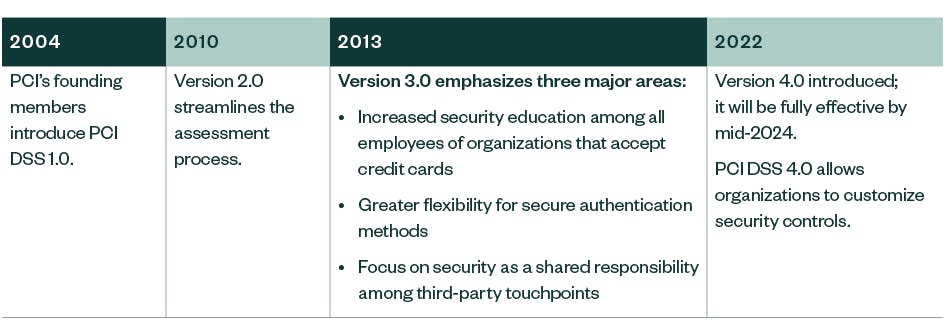
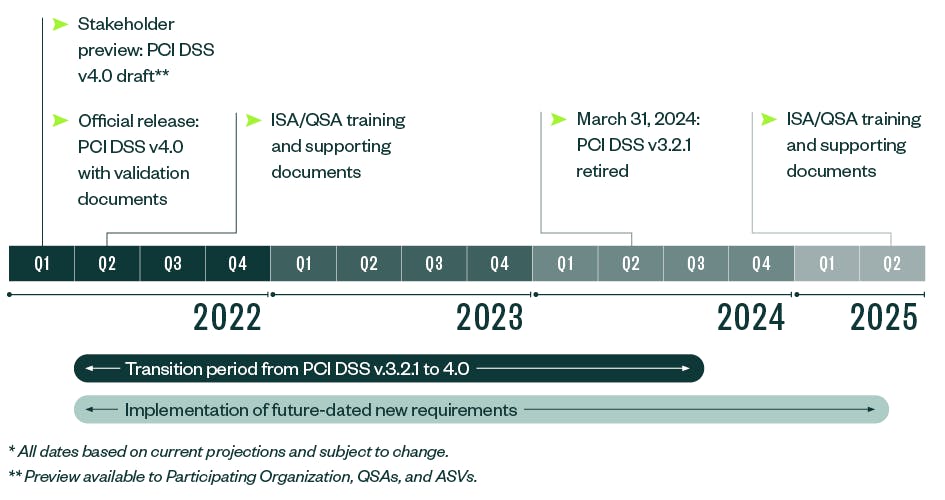
Following is an overview of PCI DSS, the updated compliance approach, and new requirements.
PCI DSS background