Article
Employer paid family and medical leave credits expanded by OBBBA
Oct. 7, 2025 · Authored by Bob Johnson
The One Big Beautiful Bill Act (OBBBA) makes permanent the paid family and medical leave (PFML) income tax credit under Internal Revenue Code § 45S (IRC § 45S), originally introduced by the Tax Cuts and Jobs Act.
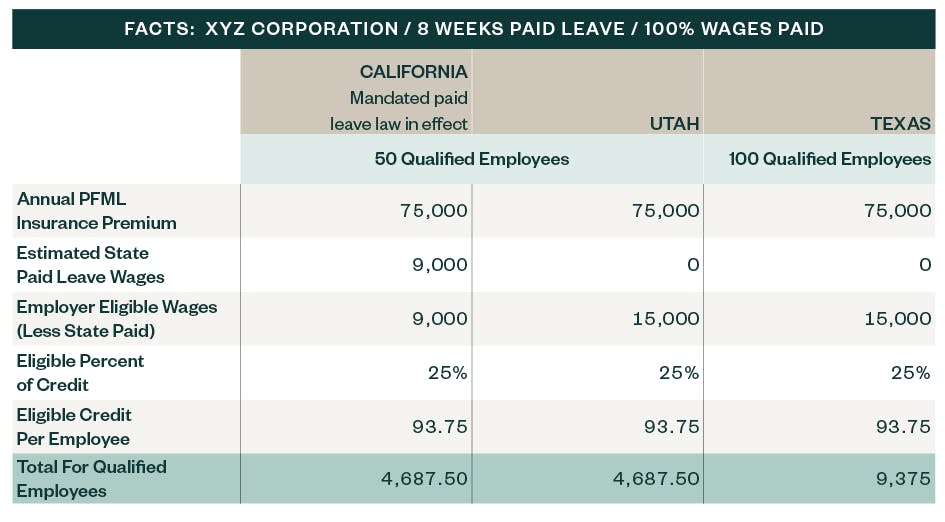
Beginning with tax years starting after Dec. 31, 2025, employers may choose between two methods for calculating the credit: a wages-paid method or a newly introduced premium-based method.
Wages-paid method
Currently, employers that voluntarily provide paid family and medical leave to qualifying employees can claim a tax credit ranging from 12.5% to 25% of the wages paid during leave, depending on the percentage of normal wages replaced during the leave. The credit increases incrementally from 12.5% when the employee is paid 50% of regular wages, up to 25% when the full wage is paid.
Example
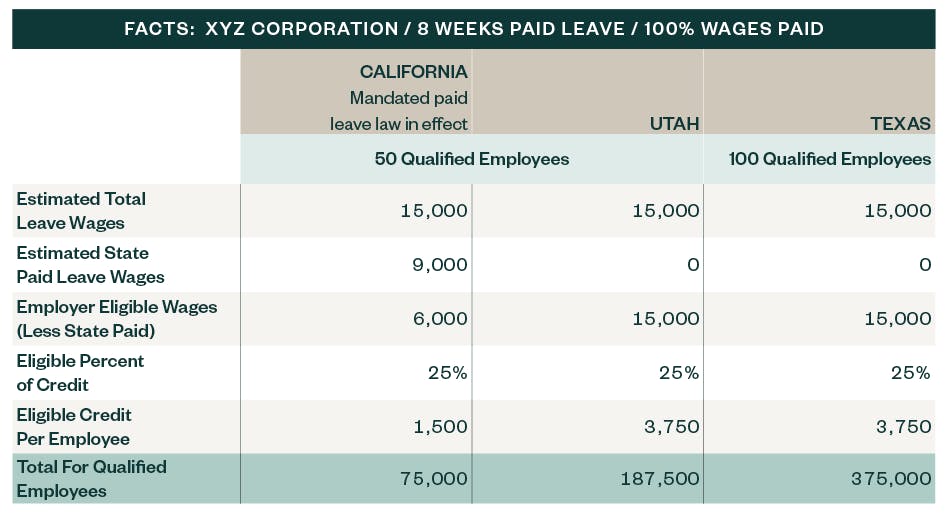
XYZ Corporation has implemented an 8-week paid family and medical leave program, covering employees at 100% of regular wages. The impact of the federal PFML tax credit varies by state, depending on whether state-mandated paid leave benefits are in effect and the percentage of wages paid that may exceed 50% of the employee’s normal wages.
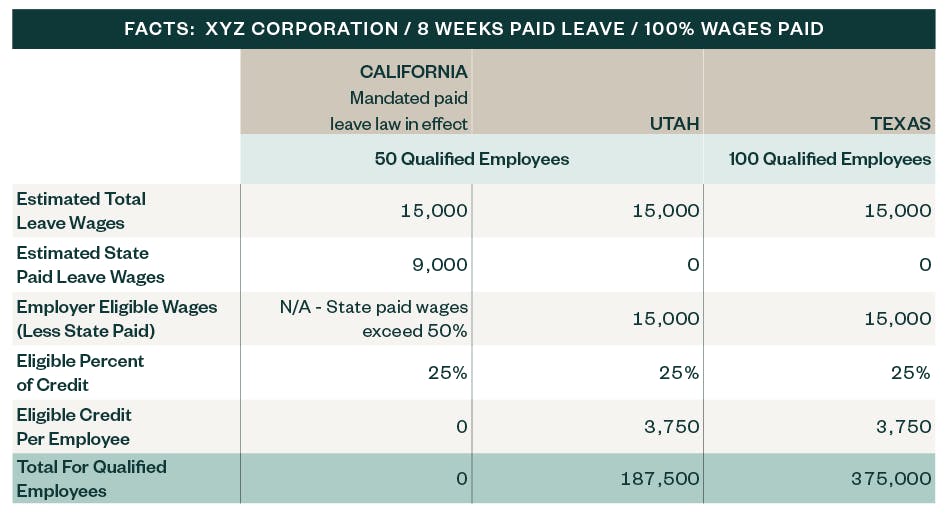
Because California mandates a paid leave program funded through state contributions, the employer’s supplemental wages don’t qualify for the PFML credit. As a result, no federal tax credit is available for the 50 California employees.
Texas and Utah don’t provide state-mandated benefits allowing XYZ Corporation’s PFML wage payments to qualify for the credit. At 100% of wages, the 25% credit rate applies resulting in a tax credit of $187,500 for Utah wages paid and $375,000 for Texas wages paid.
Wages-paid method enhancements
Revisions to IRC §45S made by the OBBBA permit employers in states with mandatory PFML programs to now claim the federal PFML tax credit for employer-funded paid leave that exceeds state-mandated benefits. This change allows employers to capture the credit for any supplemental leave they voluntarily provide, such as increasing a 60% state wage replacement to 100%, or extending the duration of leave beyond the state-mandated period.


Unpacking the benefits of the One Big Beautiful Bill Act
The information provided here is of a general nature and is not intended to address the specific circumstances of any individual or entity. In specific circumstances, the services of a professional should be sought. Tax information, if any, contained in this communication was not intended or written to be used by any person for the purpose of avoiding penalties, nor should such information be construed as an opinion upon which any person may rely. The intended recipients of this communication and any attachments are not subject to any limitation on the disclosure of the tax treatment or tax structure of any transaction or matter that is the subject of this communication and any attachments.