
Article
How to achieve business goals with a technology road map
Jan. 31, 2024 · Authored by Michael Parker, Chuck Andrews
Various departments in your business may have individual technology needs, but a technology road map encompasses your entire business. It gives you visibility into your technology standing, helps prioritize focus areas, and paves a path to build strategic plans and tangible action plans that align with your overall business plan and strategy.
Planning and mapping out long-term organizational outcomes with the role your systems will play in those plans is a huge step towards achieving your goals. However, you need more than a strategy.
An execution plan can help define the necessary decisions and next steps that allow you to achieve incremental gains on the path towards meeting your business goals.
What is a technology road map?
The purpose of a technology road map is to help you gain visibility into your current technology standing, prioritize key focus areas, and build future-focused plans aligned to your strategic business plan.
Rather than assess your needs for a defined timeframe, a road map can help you approach new technology with the understanding that you will continuously evolve and reevaluate your business goals and how to support them.
Going beyond simple technology implementation, you can integrate solutions that support your people, process, and technology to work together to move your organization forward and make sure your technology strategy and plan are aligned with the business.
Holistic benefits of a technology road map
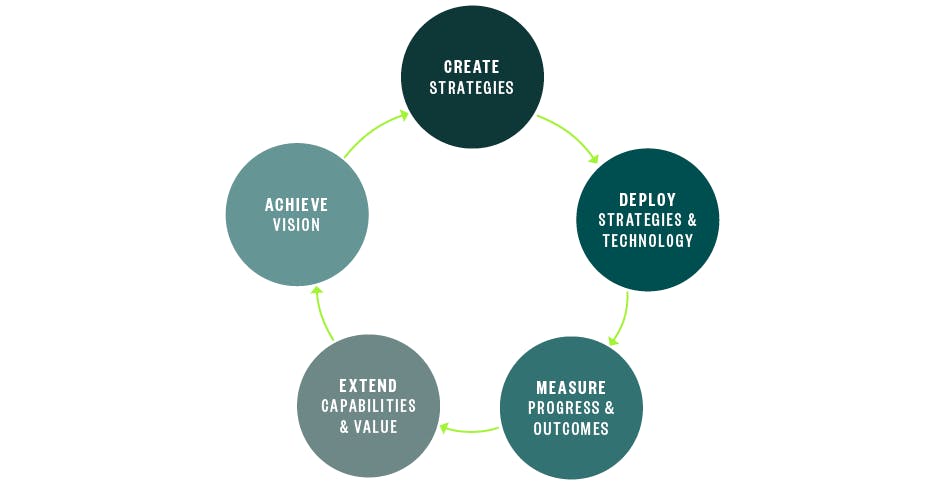
How a technology road map can help
Developing a comprehensive technology strategy — a technology road map — can help proactively address business objectives and challenges.


