Article
Key governance concepts every Tribal council member should know
March 22, 2023 · Authored by Annie Rose Favreau
People elected to Tribal councils — sometimes called a board of directors or congress — often bring a wide range of skills, backgrounds, and viewpoints to the table.
However, newly elected officials often lack previous experience serving on a government council or other type of governance group. Without experience, it can be difficult to know what’s expected in the new role.
Below are key considerations for all Tribal council members — new or experienced — to keep in mind while working to serve their community.
Embrace the Tribal council role
Every Tribe defines the scope, authority, and responsibilities of the Tribal council differently, but there are generally four primary responsibilities.
Establish the Tribe’s strategic framework
Tribal councils typically help shape the Tribe’s strategic plan and select key strategic priorities for the Tribal government to focus on within the next one to five years.
Ensure accountability
Tribal councils typically review reports, dashboards, and other data to ensure:
- Progress is being made toward strategic goals
- Services are provided to the community in an appropriate manner
- The Tribe’s financial position is sustainable
Provide goodwill and support to the Tribal government
As leaders of the Tribal government, council members often represent the organization as a whole when building partnerships, seeking resources, or speaking with members of the Tribal community.
Set the direction of the Tribal government
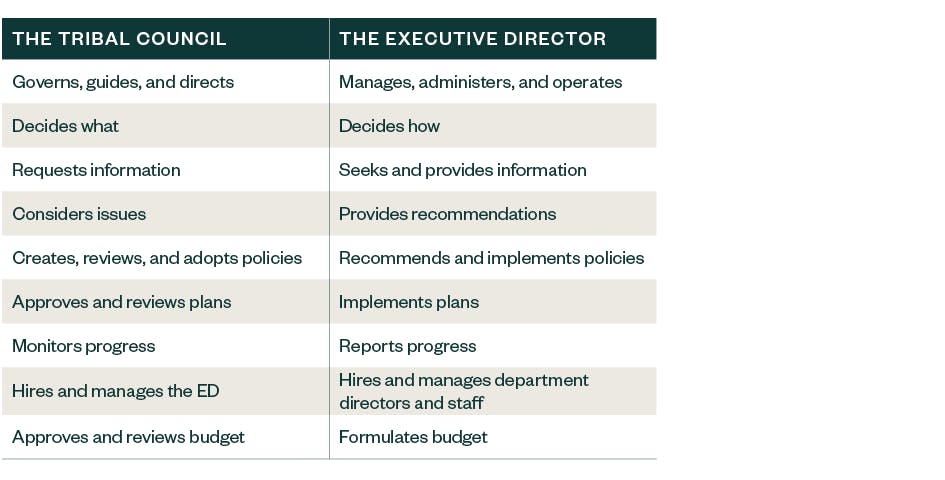
Tribal councils typically manage the Tribe’s executive director (ED) and help them achieve specific goals and actions by working with the rest of the Tribal government department directors and staff.
There’s a distinction between governance, which involves guiding and directing activities at a strategic level, and management, which involves specific work. The following table shows the different roles and responsibilities between council members and the ED they oversee.