
Article
Integrate data analytics for informed business decisions
Sept. 6, 2022 · Updated Oct. 27, 2022 · Authored by K.C. Fike
Using data analytics for your business can drive significant value and agility. Access to organized, readily available, and updated data can allow you to gain insight into emerging trends to make quick and informed decisions. Executives and managers can better strategize when they have data available.
With the right tools and engaged employees, you can make informed decisions to help manage trends and challenges — at whatever stage your business is with data analytics.
Six stages of data analytics integration and utilization
There are six stages along the data maturity curve an organization might go through on the way to becoming data driven:
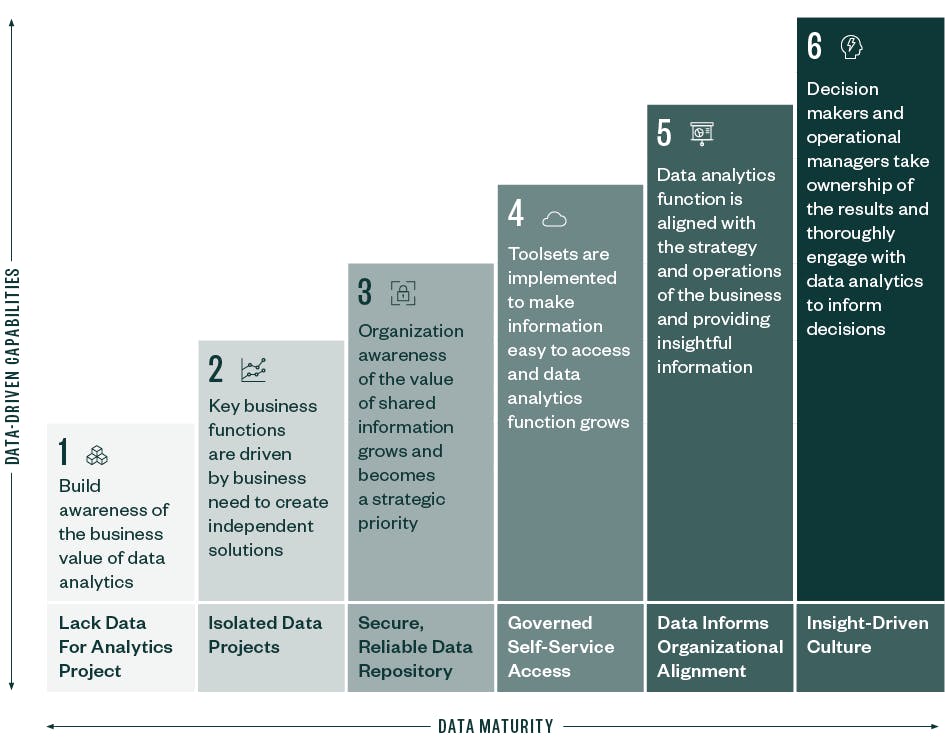
1. Not enough data for analytics projects
Organizations at the beginning of the process and lacking insight into their data can start by building awareness of the business value of data analytics. They should be able to articulate the importance of data and what questions around their business they’re seeking to answer.
2. Isolated data projects
In stage two, key business functions are driven by a need to create independent solutions. Teams pull data from source systems and use spreadsheets to compile, clean, and understand the data, then prepare outputs.
This stage is often inefficient and prone to errors and siloing. Auditing your current structure could provide a road map to help your organization move out of the heavy lifting stage toward a successful data-driven model.
A data analytics audit could help your organization:
- Determine how ready you are to move away from spreadsheets
- Identify areas where you spend the most time and opportunity costs to prepare spreadsheets
- Identify if your current spreadsheet system could move to a more automated process
