Additional factors to consider
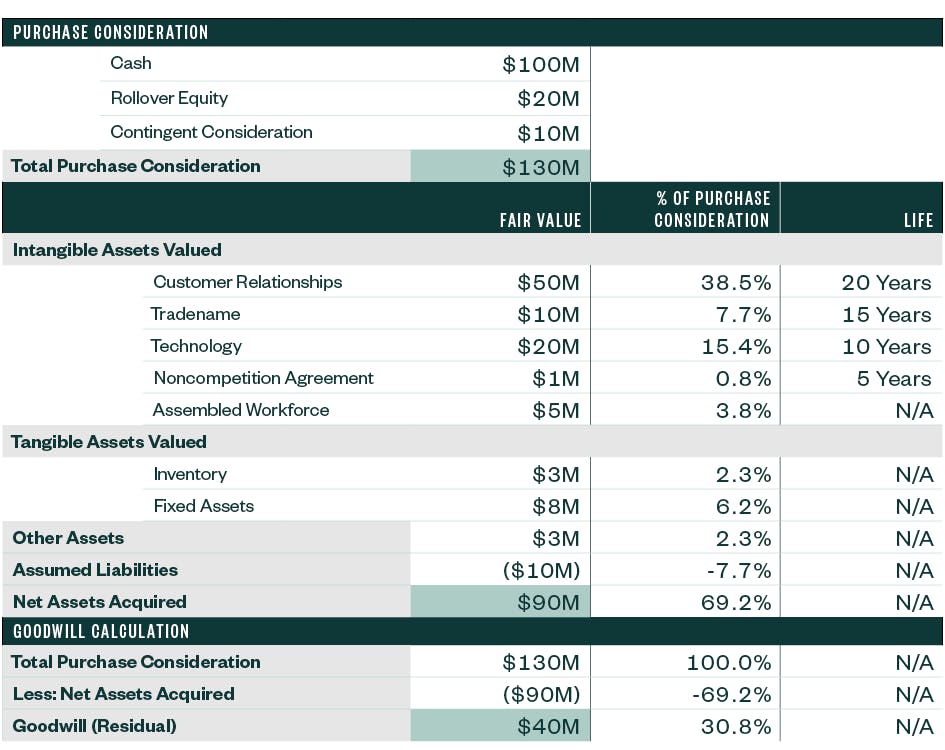
There are several factors that can affect the complexity of a purchase price allocation.
The private company alternative — ASU 2014-18
Private companies that choose to adopt the private company alternative will no longer recognize or otherwise consider the fair value of certain customer-related intangible assets or those attributable to noncompetition agreements acquired in business combinations and certain other qualifying transactions.
Instead, these amounts will be included as a part of goodwill. Private companies that adopt the alternative may benefit from cost savings, since it eliminates the need to:
- Separately recognize certain customer-related intangible assets and noncompetition agreements
- Conduct impairment testing of such assets in future periods
It also makes the purchase price allocation less complicated and therefore less costly. If adopted, the alternative would constitute an accounting policy change that requires prospective application to all future transactions after the adoption date.
This alternative also requires that goodwill is amortized over a period of 10 years, or alternative life if supported.
It’s important to note that if a company elects this accounting alternative but then decides to enter the public markets at a later date, it’ll be required to unwind the accounting related to the alternative for any historical periods presented in public filings. This can be a robust effort.
Inventory
Fair value adjustments to inventory have the potential to be material, especially if the target manufactures a product and holds a large quantity.
Discuss materiality level with your auditor and work with your purchase price allocation provider to understand whether determining the fair value for the inventory will be meaningful to the purchase price allocation exercise or not.
The following factors will typically lead to a larger fair value inventory adjustment:
- Margins on the sale of your finished goods inventory are high
- Costs to complete work-in-process inventory as of the measurement date are low
- Inventory can be disposed of quickly once it becomes a finished good
- Costs to dispose of the inventory are low, for example, quantity discounts, sales commissions, freight, and shipping charges
Fixed assets
Be careful not to overlook the target’s fixed assets as fair value will most likely be different than historic book value, and in some situations significantly different.
Experts generally recommend valuing the fixed assets if any one of the following applies:
- They’re a material percentage of the purchase price.
- The fixed assets are a critical part of the target’s business, such as a manufacturing company.
- You believe historic book value is materially different from fair value.
Your purchase price allocation provider may have the necessary skills and expertise to also perform the valuation of fixed assets, but real estate or asset specific valuations are typically performed when the amounts are likely to be material.
Intangible assets
Intangible assets may be recognized for the first time on the combined company’s statement of financial position through the application of Topic 805 to the business combination transaction. This can be complex as U.S. GAAP must be applied to elements of the transaction to conclude if recognition criteria have been met.
The governing agreement may not contemplate these assets explicitly. The economic purpose of the transaction can give clues. Many times, this process necessitates management, their technical advisors, and the valuation experts work together to agree on the intangible assets that should be recognized before any modeling of fair value occurs.
What is rollover equity?
Sometimes it’s in the buyer’s or seller’s best interest for the seller to maintain ownership in the combined entity. When this occurs, it’s referred to as rollover equity. When rollover equity is present the purchase price allocation provider will consider whether it needs to be adjusted to fair value.
Below are some examples of circumstances when the rollover equity value could need to be adjusted to fair value:
- The shares received by the seller have different economic rights than the shares held by the majority owner
- The shares received by the seller aren’t allowed to vote on matters requiring a vote
- The shares received by the seller have transfer restrictions
If any of these factors are true, it’s likely additional analysis will have to be performed to determine the fair value of the rollover equity.