
The 2026 midterm election season officially kicked off last week with primaries beginning on March 3, 2026. As we move into the 2026 election cycle, the intersection of fiscal policy and political shifts has reached a critical juncture. Following the sweeping tax law changes of 2025, this year’s midterms will serve as a referendum on current fiscal policy and determine whether the Trump administration maintains its legislative momentum or faces a divided Congress for the next two years.
Notably, the tax policy landscape on Capitol Hill will be significantly impacted by the midterms – both before and after election day – for the remainder of Republicans’ majority control of the 119th Congress though 2026. And the yet-unknown composition of the 120th Congress will define the legislative agenda moving forward into 2027 and beyond, which includes facing another tax cliff in 2028/2029.
For now, it remains to be seen whether the razor-thin Republican majorities in Congress will hold or if the historical "midterm curse" for the party in power will return. Understanding the factors affecting decision-makers and tracking developments can help taxpayers wrangle uncertainty by assessing and planning for potential tax policy outcomes.
Balance of power
On Jan. 3, 2025, the 119th Congress convened, beginning its two-year term. Republicans currently hold a narrow majority in both chambers.
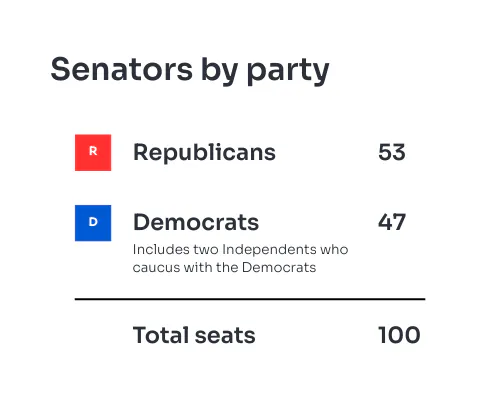
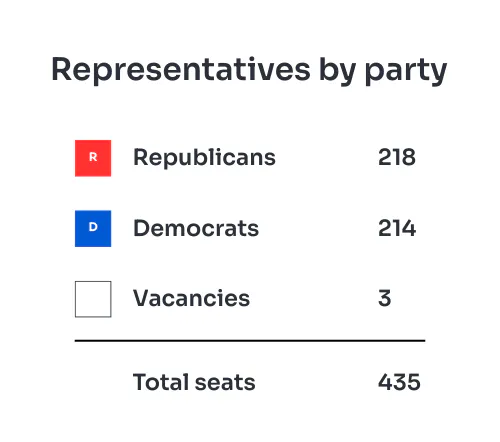
Source: Govtracks.us
Although Republicans have been working with a so-called trifecta (control of the White House, House and Senate), which enabled the enactment through budget reconciliation of the sweeping tax overhaul commonly known as the One Big Beautiful Bill Act (OBBBA) (P.L. 119-21), legislating has still proven difficult. Amidst slim vote margins, competing legislative priorities and intraparty discord, it goes to show that a unified government doesn’t always mean smooth sailing.
Midterms overview

Related sections

January 2026 Policy Pulse
The information provided here is of a general nature and is not intended to address the specific circumstances of any individual or entity. In specific circumstances, the services of a professional should be sought. Tax information, if any, contained in this communication was not intended or written to be used by any person for the purpose of avoiding penalties, nor should such information be construed as an opinion upon which any person may rely. The intended recipients of this communication and any attachments are not subject to any limitation on the disclosure of the tax treatment or tax structure of any transaction or matter that is the subject of this communication and any attachments.