Article
Three supply chain considerations for e-commerce companies expanding overseas
Oct. 21, 2021 · Updated May 26, 2022 · Authored by Sharon Gregory, Michael Parker, Roy Deaver
Your e-commerce business could see a significant impact on margins when you optimize your e-commerce management and identify opportunities for improvement during each step of the supply chain.
There are three main considerations for business owners trying to achieve a true global supply chain when it comes to e-commerce supply chain logistics:
- Sourcing and shipping. How product origin and your logistics choices impact taxes and duty.
- Product pricing. How taxes, duties, fees, and regulations on international shipments impact product pricing.
- IT systems. How technology can help support tax and trade compliance on worldwide sales as well as shipment tracking.
E-commerce supply chain sourcing and shipping
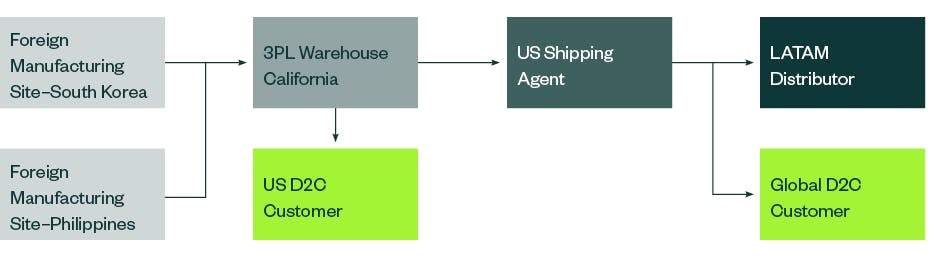
One of the primary goals for an e-commerce business is to deliver products to the customer at the best possible price. Looking at the supply chain from end to end and analyzing all available options could help reduce costs and provide the customer with a seamless and transparent shopping experience, as well as competitive prices.
What are the primary e-commerce challenges for sourcing and shipping considerations?
When looking at your product supply chain, there are four e-commerce challenges and fundamental decisions for your business to make.
Answer the following questions on day one when the framework of the e-commerce supply chain is being built. Implementing the right framework could protect your business from compliance, legal, and tax implications.
- Who will be the importer of record? Importer of record is the entity responsible for getting goods across a foreign border.
- Will you invest in the compliance, legal, regulatory, and tax requirements to either sell to or operate in any jurisdiction? There’s generally a minimum cost of entry to managing a true global, direct-to-consumer (DTC) e-commerce supply chain.


Related sections
The information provided here is of a general nature and is not intended to address the specific circumstances of any individual or entity. In specific circumstances, the services of a professional should be sought. Tax information, if any, contained in this communication was not intended or written to be used by any person for the purpose of avoiding penalties, nor should such information be construed as an opinion upon which any person may rely. The intended recipients of this communication and any attachments are not subject to any limitation on the disclosure of the tax treatment or tax structure of any transaction or matter that is the subject of this communication and any attachments.