Article
How TCFD and the GHG protocol are driving ESG regulations
Prepare for climate-related risk and reporting today
Sept. 26, 2023
Updated Oct. 24, 2023, to reflect the passing of California's Climate Accountability Package
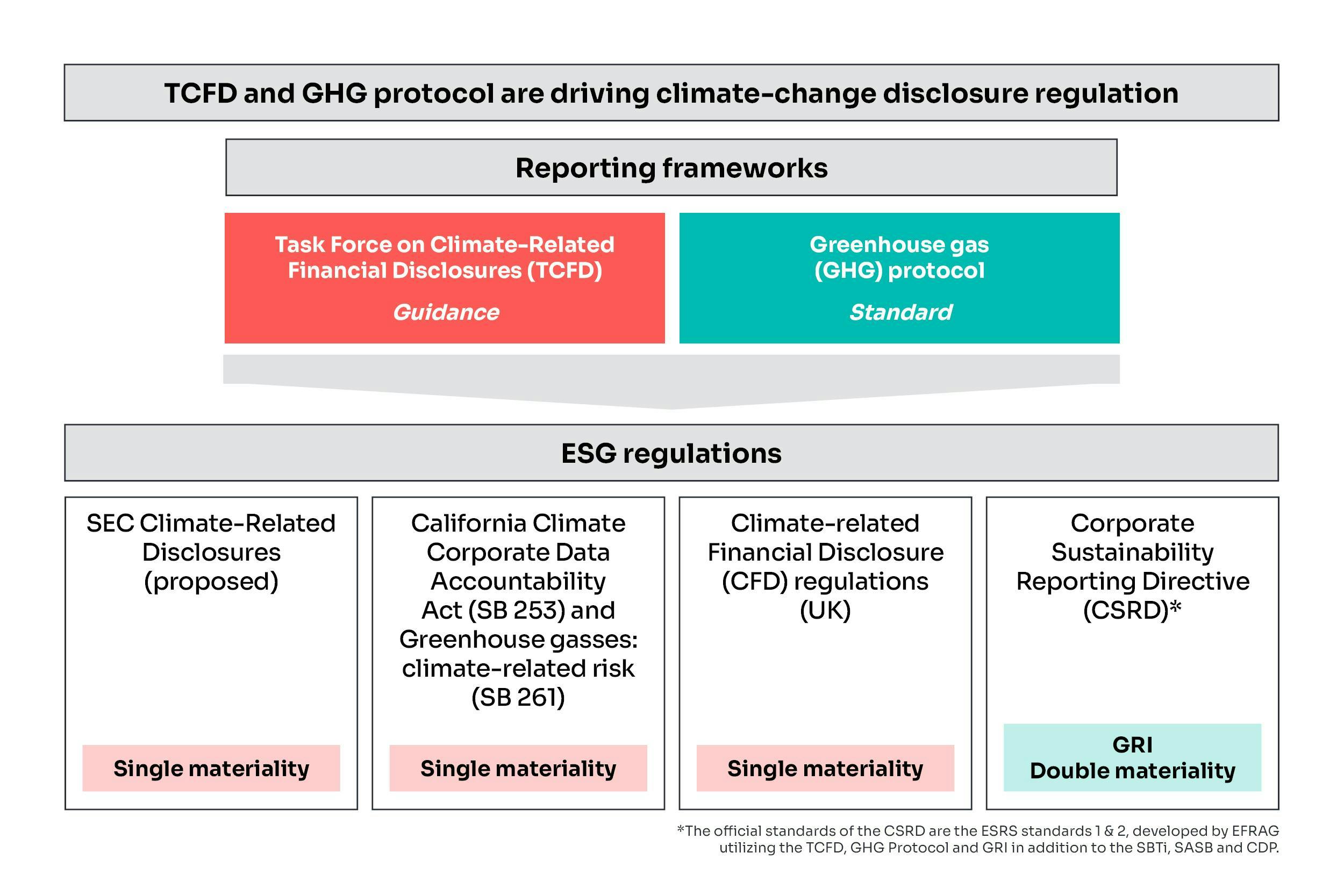
The evolution from voluntary to involuntary ESG disclosure in the United States is ramping up as a result of the SEC’s proposed climate-related disclosures and California’s Climate Accountability Package which includes the California Climate Corporate Data Accountability Act (SB 253) and Greenhouse gasses: climate-related risk (SB 261). Also, Europe is setting the example with the European Union’s adoption of the Corporate Sustainability Reporting Directive (CSRD) in 2021, and the United Kingdom’s Climate-related Financial Disclosure (CFD) regulation, which was introduced in 2022.
When evaluating the requirements of each of the above regulations, there are clear commonalities among them that can help organizations strategically prepare for future ESG reporting requirements. And even if organizations aren’t directly subject to the regulations, all have required action steps.
What are the commonalities across climate-related regulations?
The U.S., U.K. and EU regulations are rooted in two main reporting frameworks:
- Task Force on Climate-Related Financial Disclosures (TCFD)
- Greenhouse gas (GHG) protocol
The reliance ESG regulations have on the TCFD and GHG protocol (and not other reporting frameworks) demonstrates clear acceptance of the two frameworks today and for the future. That said, organizations should prepare for GHG scope 1 and 2 reporting and climate-related risk disclosures through the implementation of the TCFD recommendations and the GHG protocol. Starting with these two reporting frameworks prepares organizations for current and future reporting requirements.
What is the TCFD?
The TCFD is a reporting framework that focuses on governance, strategy, risk management and metrics and targets of climate change disclosures. The framework requires organizations to quantify current baseline data, apply a scenario analysis to understand risks, identify improvement opportunities, set goals and report on the findings and conclusions.