
Article
Human resources maturity assessment: Your competitive advantage
Jan. 20, 2025 · Authored by Brett Addis
In today’s rapidly evolving business landscape, conducting a human resources (HR) maturity assessment is essential to remain competitive and maintain business growth. Only a mature, agile HR department can drive real value as companies face complex challenges in talent management, digital transformation, and diversity, equity, and inclusion (DEI).
An HR maturity assessment allows your organization to gauge the effectiveness of the HR function, helping to uncover strengths, pinpoint areas for improvement, and develop actionable strategies for future growth.
What’s an HR maturity assessment?
An HR maturity assessment is a structured evaluation of the HR function, measuring how well it operates and aligns with broader business goals. The assessment typically examines key HR program, process, and technology areas such as talent acquisition, talent management, learning management, DEI, employee experience, digital capabilities, and data analytics.
HR maturity is often divided into four developmental levels:
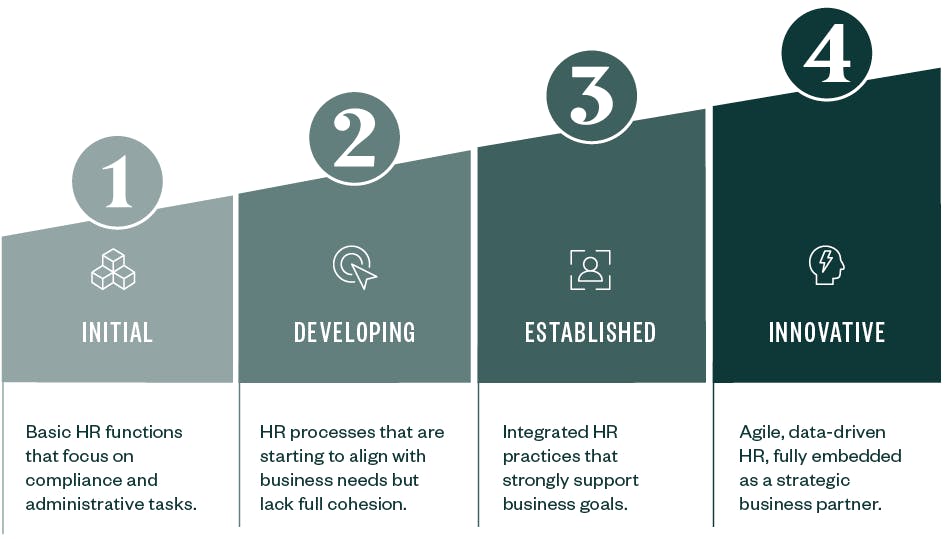
This framework helps to assess HR capabilities and build a path to higher maturity, focusing on areas that will drive the most value.
Benefits of an HR maturity assessment
An HR maturity assessment offers several powerful advantages, including:
- Strategic Alignment. An assessment helps align HR with broader organizational objectives, making it more likely to achieve strategic goals and drive tangible results.
- Informed Decision-Making. The analytics from an HR maturity assessment help to improve decision-making effectiveness.
- Enhanced Employee Experience. Insights from the assessment can lead to mature, employee-centered HR practices that increase engagement and reduce turnover.
- Organizational Agility. A mature HR function can be a key contributor to organizational resilience as industries and markets change.
