How to improve performance management in your organization
2022 and 2023 were challenging years for organizations in terms of talent acquisition, engagement, and retention due to talent shortages and related employee burnout.
Moving into 2024, organizations should recognize an integrated talent management philosophy is crucial to a holistic and meaningful employee experience. Organizations should consider building an approach that supports every stage of employment.
Below are a few of the changes some organizations are implementing to help improve performance management.
Continuous feedback
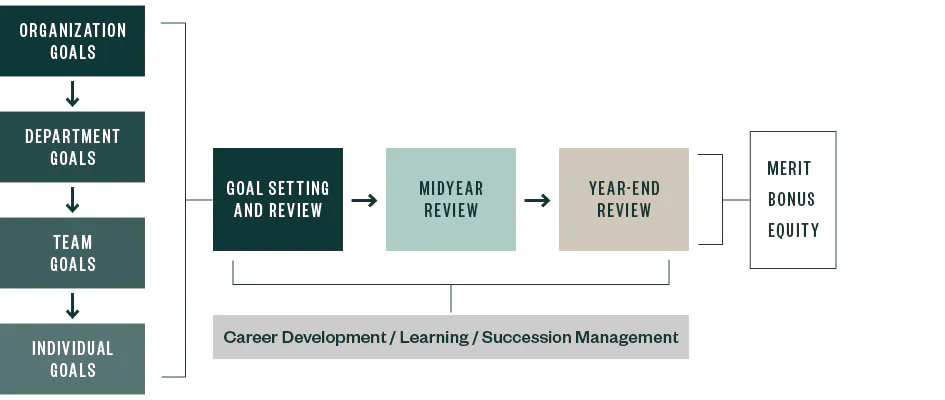
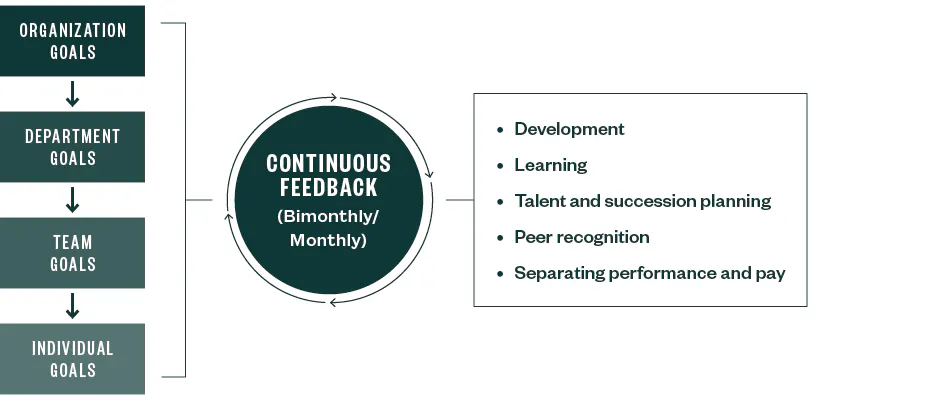
Immediate and ongoing feedback focuses on real-time conversations, formal or informal, between managers and employees based on performance. Unlike traditional performance management process where there’s a midyear and year-end review conversation, these conversations take place throughout the year. Frequent performance conversations allow the employee time to adjust in their current role, or proactively develop for future their future role.
Forward looking
Forward-minded feedback and actions allow organizations to focus on the building new skills or capabilities, such as mentoring, development, and training to address future individual and organizational needs. It also allows for a more collaborative and action-based discussion to help improve manager and employee relationships, engagement, drive motivation and performance.
Action-based reviews
Action-based reviews go hand in hand with forward looking discussions. Having an action-based approach demonstrates the organizations commitment and investment to the employee’s performance and growth. Action-based reviews focus on the assignment of development, learning, and other activities to support employee potential, as opposed to listing improvements the employee needs to make.
Compensation
Organizations tend to integrate performance conversations with compensation discussions, which could create anxiety and uneasiness for both the employee and manager. Combining these topics is less forward-looking in that it reverts the conversation into past performance. Many organizations have begun separating performance and compensation conversations to allow dedicated and transparent conversations on both topics.
Rewards and recognition
Continuous rewards and recognition seems to be on the rise, where organizations can leverage platforms to reward and recognize employees for their contributions as they occur. By no means a replacement for merit, bonus, or equity, this provides additional reinforcement to create awareness of positive performance.
Reviews and rating
A common debate within the talent management community beyond how organizations should deliver performance ratings, but whether organizations should provide performance ratings.
Performance ratings can carry stigma for an employee, ultimately affecting how organizations invest in that employee’s growth or tenure. Employees may feel that reviews and rating are biased, unfair, and lack transparency.
Organizations have been shifting from numerical rating systems to term-based rating to soften the impact, although the results may be the same as opposed to the recent shift to that of an unrated system.
Some organizations are also shifting from the traditional one or two review periods per year to a continuous feedback cycle. Reviews without ratings can mitigate stigma, create a better performance experience, and result in a review that helps measure performance, identify high performers or high potential and successors, based on facts versus preferences.
Ratings could remain optional and align with the organization’s performance philosophy. If ratings are utilized, focus on employee preparation for goal achievement, actions prompted by coaching, and team feedback rather than individual performance alone.
Goal transparency
A shortsighted approach to goal setting can cascade through a company’s hierarchy before ever even falling to the employee. These goals, often generic or without clear definition, can fail to outline employee performance expectations or how to best align themselves with the growth of the organization.
Competency focused
Set expectations with employees regarding the knowledge and skills needed to achieve the desired goals and create a proactive development plan to support employee performance against these goals.
Coaching
Manager roles may see better results with a shift away from reviewer to that of a coach. Managers should spend more time understanding employee, needs, expectations, and challenges to provide clear guidance on how to better increase performance or position themselves for career development and progression.
Team feedback
Place greater emphasis on collecting feedback from others regarding employee strengths and gaps. This feedback contributes to performance coaching, career development, and planning.