Article
Align internal processes as you implement a digital transformation strategy
March 6, 2023 · Authored by Pamela Esparza
Many companies invest in digital transformation by using technology to automate processes and data flow. When done strategically, digital transformation can be especially beneficial, helping companies run leaner, be more effective and efficient in their operations, and enhance customer and shareholder experience.
There are several aspects of implementing a digital transformation strategy. How do you align the technology with your current business processes and controls? Is your current system sufficient, or do you need changes? What are the cybersecurity risks?
This article will focus on aligning technology with internal processes and controls.
What Is Digital Transformation?
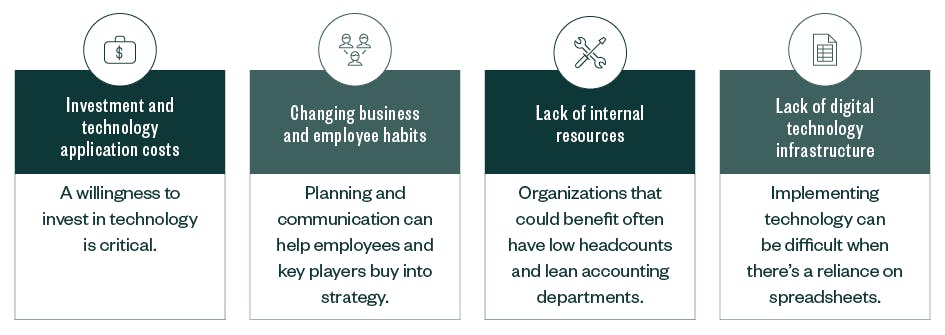
Digital transformation is the process of transforming business processes with technology. Digital transformation can offer many benefits, but it’s important to first understand potential challenges of creating and implementing a strategy.
Digital transformation strategy challenges
Internal processes and controls
In advanced technological environments, organizations can more reliably and consistently address risk if they can move to a more automated solution. IT-driven controls aren’t subject to human error, bias, or management override.
Companies can use the following controls to assist in their accounting.
Manual controls
Though technology can be used to supplement manual controls, there will always be instances where management will need to make a subjective conclusion on a complex topic. This must be done via some type of human intervention.
Consider manually monitoring the following:
- Management review controls (MRCs)
- Estimates or accruals and other dissemination of critical information
- R&D spend expectations and percentage complete
- Vendor banking details
Spreadsheets and end-user controls (EUCs)
In spreadsheet-heavy environments, organizations can establish entity-wide programs to help manage EUCs.
The following are strategies to implement that support security if your organization uses spreadsheets:
- Maintain accurate inventory of all discovered, registered, and managed files
- Implement version, access, change, and data integrity controls
- Establish procedures that monitor changes to inputs and logic
- Restrict access to spreadsheets so that only supervisors have access to unlock cells
- Leverage Excel add-ons and embedded applications, such as Smartsheet, Tableau, or Domo