Many companies invest in digital transformation by using technology to automate processes and data flow. When done strategically, digital transformation can be especially beneficial, helping companies run leaner, be more effective and efficient in their operations, and enhance customer and shareholder experience.
This article will focus on assessing existing IT systems and infrastructure.
“
What Is Digital Transformation?
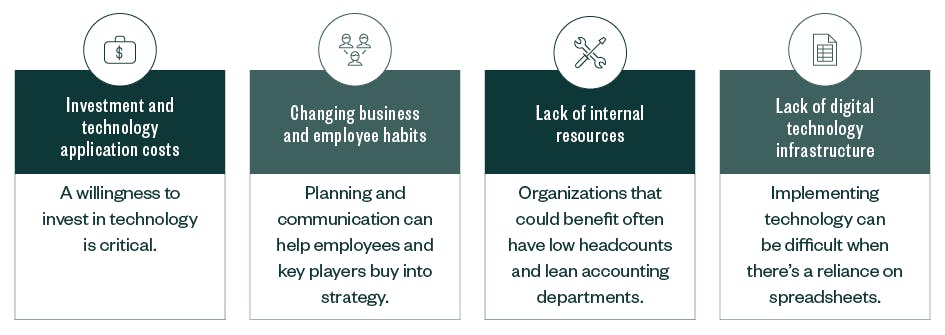
Digital transformation is the process of transforming business processes with technology. Digital transformation can offer many benefits, but it’s important to first understand potential challenges of creating and implementing a strategy.
Digital transformation strategy challenges
IT systems and infrastructure
Improving your internal business systems is a benefit of digital transformation. If any of your systems, such as
(ERP), customer relationship management (CRM), or payroll, aren’t doing what they need to do, it may be worth conducting a comprehensive fit gap assessment. This is the process of assessing a system for visibility and scalability in support of all business processes.
You’ll document and prioritize your organization’s functional requirements, and assess the system’s ability to meet them with a focus on:
Vendor road map for future upgrades and enhancements
Integrated systems and other available solutions within the vendor ecosystem
Understand common system challenges
Before you begin an assessment of your current enterprise system, it can help to understand common system challenges.
Business process automation
Enterprise systems are meant to:
Reduce manual processes
Allow for increased visibility across an organization
Help improve decision making
If you already have an enterprise system but a particular business process isn’t automated, you may need a process-focused fit gap assessment.
Reporting challenges
The ability to measure corporate performance is a hallmark of a truly powerful enterprise system. Qualities of an enterprise system with strong reporting capabilities include:
Readily exportable to Excel, Word, or other third-party analysis systems
Reliable reporting output requiring little analysis to reconcile the data
Reasonable cost to maintain, not needing a dedicated data analyst or consultant
Internal control and compliance
Internal control and compliance are mandatory in many situations and may be both necessary and valuable in others. Failure to meet internal controls and regulatory compliance requirements within an enterprise system can lead to fraud, fines, or both.
Current Good Manufacturing Practice and Food and Drug Administration (cGMP/FDA) validation requirements
Sunshine Act and aggregate spend reporting
HIPAA compliance
Payment Card Industry (PCI) compliance
General Data Protection Regulation (GDPR) and California Consumer Privacy Act (CCPA) compliance
How to assess existing systems and infrastructure
Below is a digital transformation road map detailing how to assess your existing systems and what to look for when in the process of replacing those systems.
Project management and change enablement
Determine who’s going to guide the project, align digital transformation goals with strategic business goals, and communicate the plan to all parties and stakeholders.
Fact finding
Learn about existing processes by:
Interviewing process owners
Identifying what’s working
Identifying pain points
Then, review your findings to prioritize next steps.
Gap analysis and research
To perform a gap analysis, analyze system requirements, determine what functional and technical needs aren’t being met, and decide if an alternative solution is needed based on the desired end state.
Recommendation and planning
Develop and document recommendations for your digital transformation, collaborate with the team to decide what needs to be prioritized first, and share the road map with stakeholders to gain buy-in.
Digital transformation solution options
Once the system assessment has been completed, consider what to do. The initiatives that result from the assessment typically fall into three categories:
Optimize or upgrade
Integrate
Replace
Optimize or upgrade
This option typically occurs when a mid-range system hasn’t been configured correctly or features weren’t implemented that could help support business process automation and reporting needs.
Assess the return on investment (ROI) of a potential new system as well as the time required for desired optimizations or upgrades.
Integrate
Integration could be applicable when a cost-effective solution can be found within the partner ecosystem or an integrated third-party vendor.
Assess the total cost of the integration, including the license, the cost to implement, and ongoing costs, especially in terms of integration platform as a service.
Replace
If you have either outgrown the current system or it’s not hitting the mark, you can go through a new system selection process to replace the current system.