Article
How a wealth advisor helps with investment strategy when selling a business
Nov. 9, 2023 · Authored by
The massive turning point — and subsequent proceeds — of selling a business often leaves successful business owners wondering how to deploy new capital. While private ownership and any corresponding real estate makes up most of an owner’s net worth, the quick shift from an illiquid concentrated investment to cash can be unnerving without proper planning.
Owners should take an intentional, coordinated approach toward next steps after the close of a deal and resist the urge to move quickly. Some basic steps to a thought-out approach detailed below.
Begin with presale personal financial planning
A wealth advisor who understands the monumental shift of a business transaction can provide a holistic view of the process, helping you set goals and implement a comprehensive wealth management strategy prior to selling the business. Having your team in place well in advance of a transaction and engaging in preplanning can help you leverage your post-sale liquidity to achieve your financial goals, as well as identify other strategies that align with your desired legacy.
Shifting from a balance sheet that included ownership in a privately held business to one without can be overwhelming. Adequate planning can help address how to allocate between different buckets and assess what a potential investment strategy might look like. A well-defined process to help determine your investment objectives involves understanding the concepts of:
- Lifetime consumption
- Multigenerational and philanthropic legacy
Lifetime consumption
Start by assessing what you expect to spend during your lifetime based on your financial goals and objectives.
Multigenerational and philanthropic legacy
Establishing multigenerational and philanthropic goals could help you to design an investment strategy to meet the objectives of each. For example, a trust that funds educational expenses for multiple generations of family members will have a different investment allocation and risk profile than a charitable remainder trust that pays income to an aging parent during their lifetime.
Design and execute an investment strategy
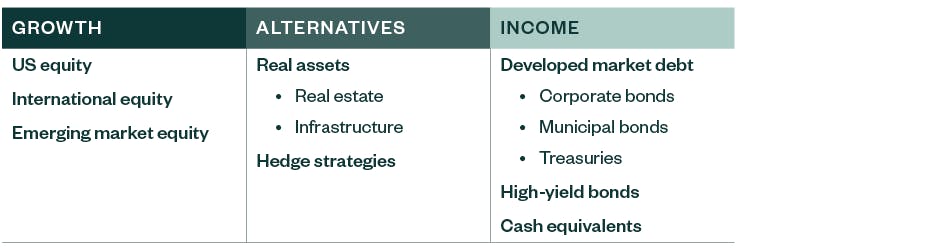
After going through the personal financial and estate planning process to determine structure and goals, an investment allocation should be determined for each structure or entity. The mix of investments will be different for each family based on the makeup of your balance sheet, current private market exposure, risk tolerance, and goals.
The information provided here is of a general nature and is not intended to address the specific circumstances of any individual or entity. In specific circumstances, the services of a professional should be sought. Tax information, if any, contained in this communication was not intended or written to be used by any person for the purpose of avoiding penalties, nor should such information be construed as an opinion upon which any person may rely. The intended recipients of this communication and any attachments are not subject to any limitation on the disclosure of the tax treatment or tax structure of any transaction or matter that is the subject of this communication and any attachments.