
Article
Making smart choices on new technology can drive organizational success
July 1, 2021 · Authored by Kayla Flint, Dave DuVarney
For years, companies have looked to various digital technologies to help them better serve their customers and improve operational efficiencies. The challenges and resources associated with outdated processes and systems give organizations a compelling business case to invest in technology.
For CFOs, digital transformation is a top priority, but only if a new technology drives revenue and improves process inefficiencies. CFOs are looking for IT transformations that allow work to be done bigger, better, faster and cheaper.
Data maturity journey
Organizations are increasingly looking at their data as a core asset to what they do. The data maturity journey reflects an organization’s ability to work with its data differently over time.
At the early stage of data maturity, organizations tend to do more manual manipulation of key data, which usually provides a backward look at the business. The data provide a picture about what happened but tell the organization very little about where it is going.
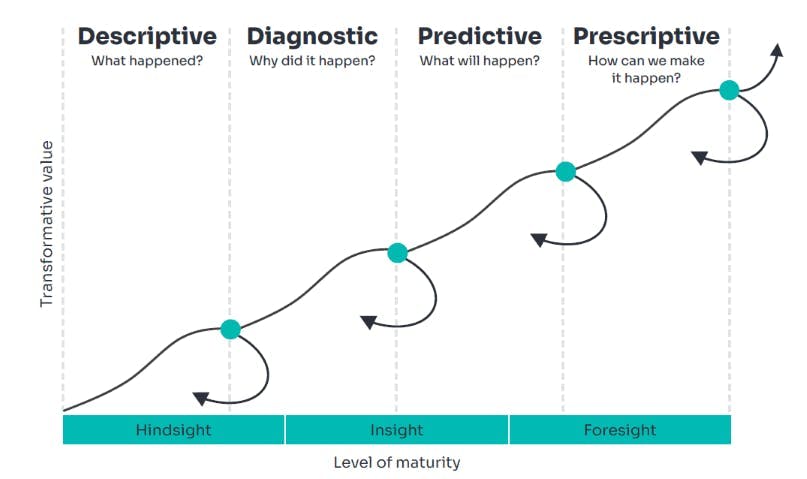
Data maturity in an organization is moving from hindsight to foresight, where data provides insight into things like the sales pipeline, product development and correct staffing levels. At the far side of the data maturity model, amplified intelligence and automation mean organizations are managing their data so well that they need minimal human intervention to make smart decisions. A prime example is stock exchanges, where computers take automated intelligence to make trading decisions.
The hard part for organizations is knowing what is possible to do with their data, struggling to get the correct data, and then giving up on the process too early. Data maturity ultimately means having the proper infrastructure, not necessarily computers and software, but the right people who understand the strategic vision and align data to carry out that vision. In short, data maturity becomes a core capability for an organization.
Technological maturity
Technological maturity is equally as important for organizations as data maturity. Purchasing a technology solution requires research within an ever-evolving and ever-changing technology marketplace. Then, the organization has to implement and manage the solution to realize its full benefits.


