Where this approach delivers the most value
The benefits of this model become especially clear in scenarios where simplicity and integration are critical. Organizations modernizing legacy systems can preserve their existing data models while gaining access to modern capabilities. This reduces the effort typically associated with large-scale migrations and allows for a more controlled evolution.
It is also highly effective when tight integration between data and analytics is required. Because everything operates within the same environment, there is less need for complex connectors or data movement. This not only simplifies development but also improves long-term maintainability.
More broadly, the ability to combine relational and analytical workloads in one place reduces duplication and keeps data closer to where it is consumed. This streamlined approach improves performance while making the overall architecture easier to manage.
Understanding the limitations
Despite its advantages, a unified platform is not a one-size-fits-all solution. Certain workloads still require specialized systems designed for high performance and reliability.
In particular, organizations should carefully evaluate:
- High-throughput transactional systems with very low latency requirements
- API-driven applications with heavy concurrency demands
- Mission-critical systems of record that require strict uptime guarantees
These scenarios often benefit from dedicated infrastructure optimized for transactional processing. A successful strategy is not about forcing all workloads into one platform, but about making intentional decisions based on performance and business requirements.
Real-world impact: Cost, speed and control in practice
Organizations that adopt a unified data platform often see measurable improvements across cost, speed and control. Consolidating systems reduces both direct infrastructure costs and the operational burden of managing multiple tools. At the same time, productivity increases as data teams spend less time on integration work and more time delivering insights.
Speed is another immediate benefit. With fewer dependencies and less data movement, reporting can happen in near real time. This allows teams to respond more quickly to changing conditions and deliver value to the business faster.
Control is strengthened through a layered approach to governance. Identity and access management, data-level permissions and consumption-layer controls can all be managed within a single framework. This consistency reduces risk while making compliance easier to maintain.
A streamlined end-to-end workflow
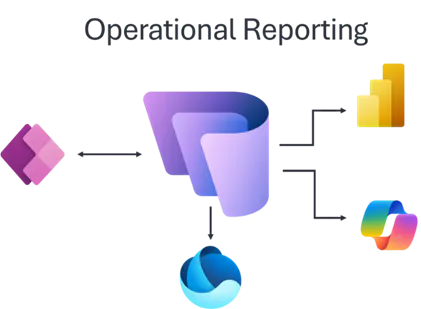
One of the most compelling advantages of a unified platform is how it simplifies the entire data lifecycle. What was once a fragmented process across multiple systems becomes a cohesive, end-to-end workflow within a single environment.
A typical flow might include:
- Rapidly provisioning a SQL database
- Loading and querying relational data
- Connecting directly to reporting tools
- Applying governance and security policies
- Enabling access through business-facing applications
By keeping these steps within one platform, organizations reduce friction and improve consistency. Data remains governed and accessible throughout its lifecycle, and teams can move from ingestion to insight much more efficiently.
Key takeaways
The evolution of data architecture reflects a growing need for simplicity, speed and scalability. Traditional multi-system approaches, while foundational, are no longer sufficient for modern analytics demands.
A unified platform offers a more streamlined alternative by bringing together data storage, processing and consumption. SQL remains a critical part of this ecosystem, providing a familiar and powerful way to work with data.
At the same time, success depends on understanding where this approach fits and where it does not. Thoughtful implementation is key to maximizing its value.
How we can help
Modernizing your data architecture requires more than just adopting new technology — it requires a clear strategy and the right execution approach. Every organization starts from a different place, and the path forward should reflect your specific goals and constraints.
At Baker Tilly, we help organizations assess their current data landscape, identify opportunities for simplification and design unified platforms that align with business needs. From modernizing SQL workloads to implementing governance frameworks and accelerating analytics delivery, our focus is on creating measurable impact.
Whether you are beginning your modernization journey or refining an existing platform, we can help you reduce complexity, move faster and build a scalable foundation for the future.