Data Solutions
Capturing, understanding and leveraging the data that matters most and bringing it into focus is no trivial matter. Rely on our experience to drive your business forward.
Data Solutions


Is your business equipped with the right data solutions to effectively and efficiently capitalize on the mountains of data available to you?
At Baker Tilly, our digital team helps our clients derive new value from their data, whether it’s through advanced machine learning, data visualization or working to implement new data processes for a “single source of truth.”
Every day, companies like yours are trying to use their data to make the best decisions possible, which means having the right data programs in place is quite literally the difference between success and failure. With so much riding on each project, we make sure to bring leading data strategy, technical expertise and business acumen to each of our data services.
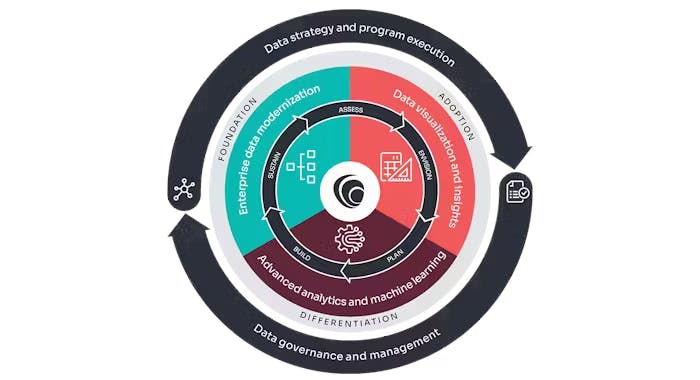
In the diagram above, the outer ring, comprised of data strategy and data governance, focuses on the strategic and operational needs a company has when building a data-driven culture.
The inner ring, comprised of data modernization, visualization and advanced analytics, illustrates the technical tools, platforms and models used to execute against the strategies and policies created in the outer layer.
Data solutions are the key for decision making
- Innovation at scale: Want to read your customers’ minds? It’s not telepathy; it’s data analytics. Equip your organization with the right data and the ability to adapt and scale, so you’ll know what your customers want before they ask you for it.