Article
Understanding your business intelligence with Amazon QuickSight
July 15, 2021
Author: Neeraj Iyer
This article is part of a series, this first article will explore what Amazon Quicksight is and the business intelligence it can provide. The second article will discuss the functionality, features and capabilities of Amazon Quicksight.
What is Amazon QuickSight?
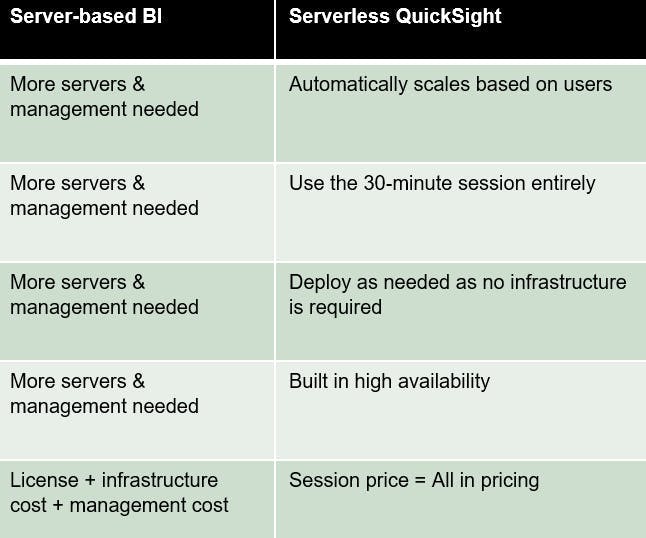
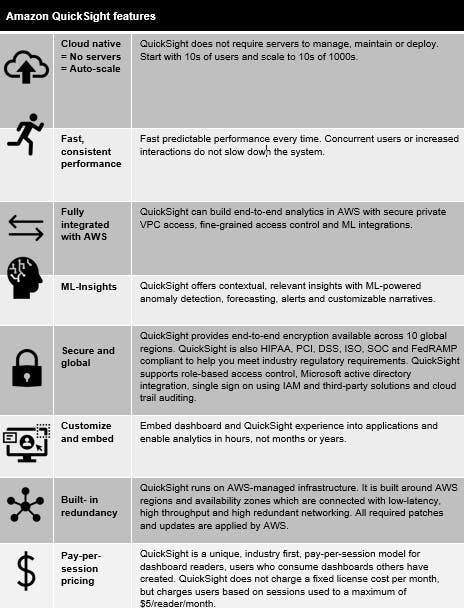
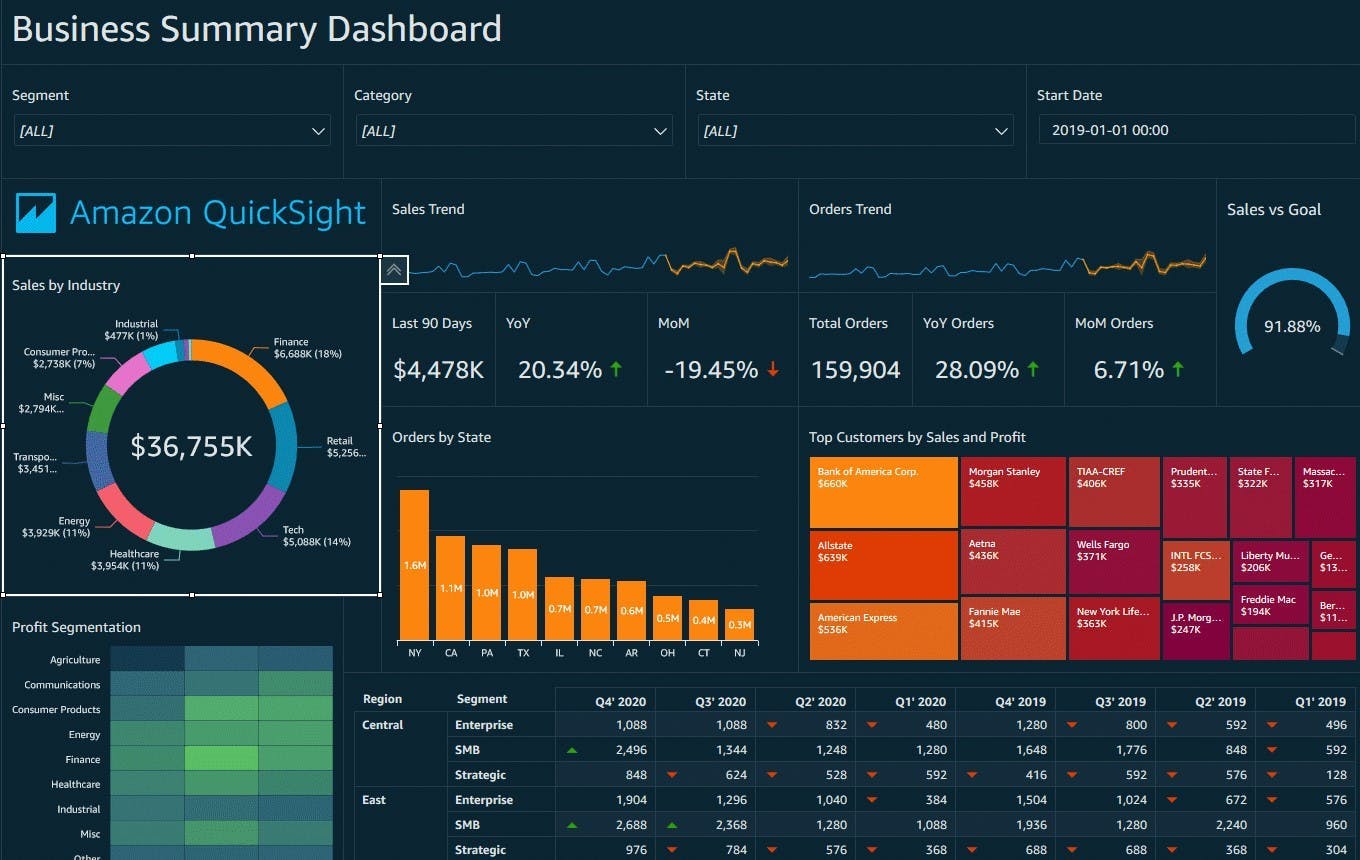
Amazon QuickSight is an Amazon Web Service (AWS) platform built for the cloud that enables customers to understand their data and strengthen their business intelligence (BI). QuickSight is a scalable, serverless, embeddable and machine learning (ML) powered business intelligence service. With QuickSight it is easy to create and publish dashboards that include ML powered insights and can be accessed from any device. QuickSight is serverless, meaning it can scale to tens of thousands of users without the need of any infrastructure. Quicksight also offers a variety of innovative features through which customers can create interactive dashboards, the image below displays what a sample QuickSight dashboard looks like.
Why do you need Business Intelligence (BI)?
Business intelligence can allow business leaders to feel more connected to their data, helping them simplify interactions and identify business trends and problems that need to be addressed to streamline their operations. BI ensures users can reduce the need for manual consolidation, improving productivity and connecting them to their data to get useful insights from it. Dashboards are the visual representation of this data, and can include some of the following benefits:
- Customization: Users can customize dashboards in terms of users and their expectations
- Interactive: Filter, sort and interact based on preferences
- Data transparency: Dashboards offer data transparency as data is the most important asset
- All in-one: In the past users spent a large amount of time reviewing and analyzing different reports. With advanced tools and features, QuickSight streamlines all reports in one dashboard