Article
Addressing fiscal pressures and uncertainty in higher education with fiscal resilience
March 17, 2021 · Authored by Kayla Flint
Watch an illustrative demo vignette showing fiscal resiliency analysis leveraging Oracle EPM Cloud.
Fiscal resiliency is not just a matter of financial health, it defines the overall viability of the institution and its ability to deliver on its mission. An August 2020 study published by The Hechinger Report showed that more than 500 colleges and universities have been struggling with fiscal pressures and uncertainty for years. For many institutions, these issues are nothing new, and the current global health crisis has aggravated the issues to the point where many higher education institutions are in unchartered territory with no clear path out.
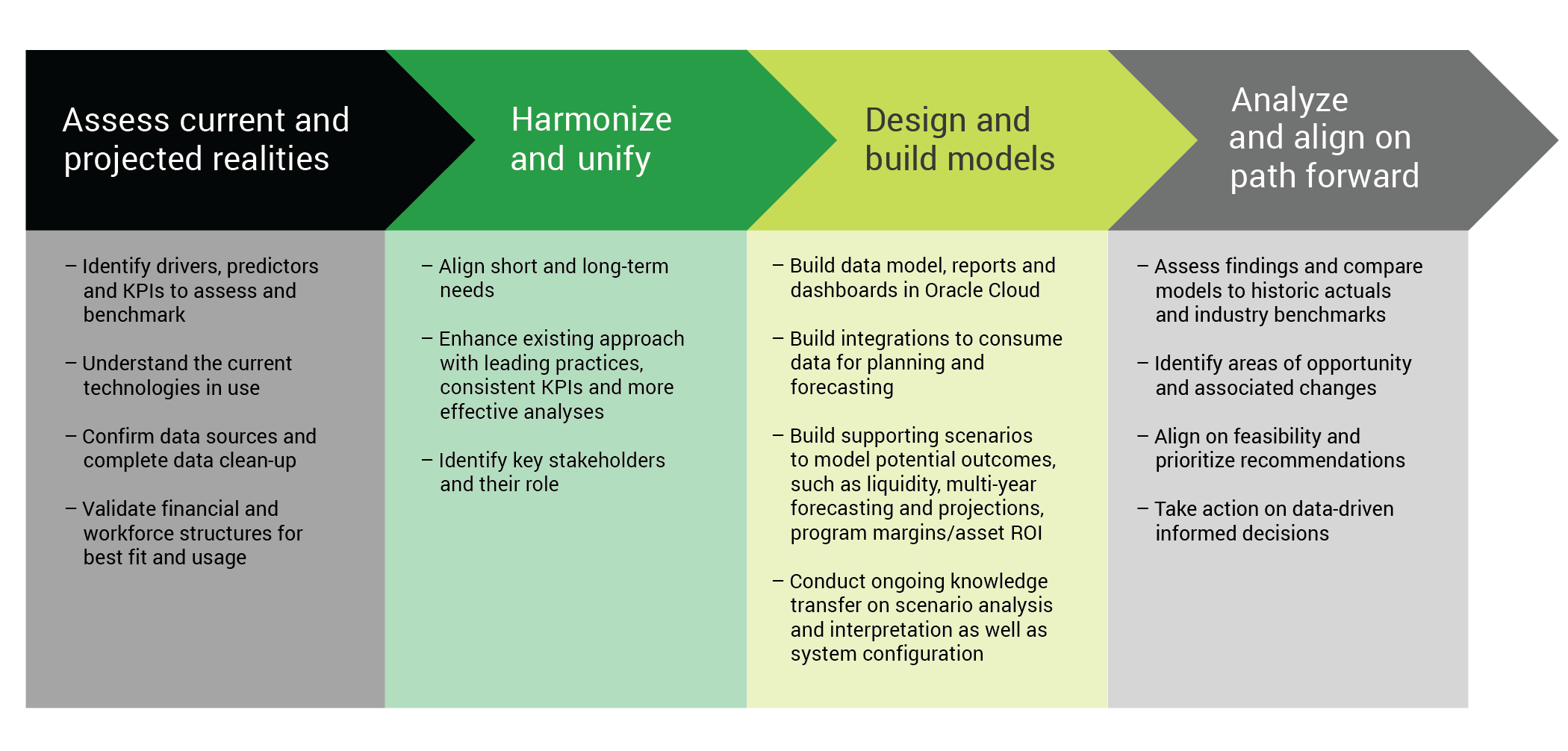
Now is the time for higher education institutions to weave a fiscal resiliency approach into their planning cycle – to address the prevalent and increasing challenges in higher education and to swiftly overcome these challenges, which have only been exacerbated by Covid-19. Institution leaders carry a heavy burden to take immediate action to shore up their financial position, all while continuing to fulfill their mission of supporting long-term student and institutional success.
Top factors impacting higher education institutions’ fiscal resiliency include:
- Student affordability concerns
- Decreasing enrollment
- Increasing operating costs
- Expanding nature of higher education service expectations
As the coronavirus pandemic is influencing every higher education institution differently, determining what programs to invest in, scale back on or cut all-together can feel overwhelming. In order to identify and explore initiatives such as shared academic programs or institutional support, inter-institution partnerships, or community/corporate partnerships, both higher education industry acumen and technical capabilities are required. In an environment that will continue to change, it is crucial institutions have the capability to forecast, model and take action.