Article | Tax alert
House introduces major tax proposals
Sept. 16, 2021 · Authored by Paul Dillon, Michelle Hobbs, Mike Schiavo
Introduction
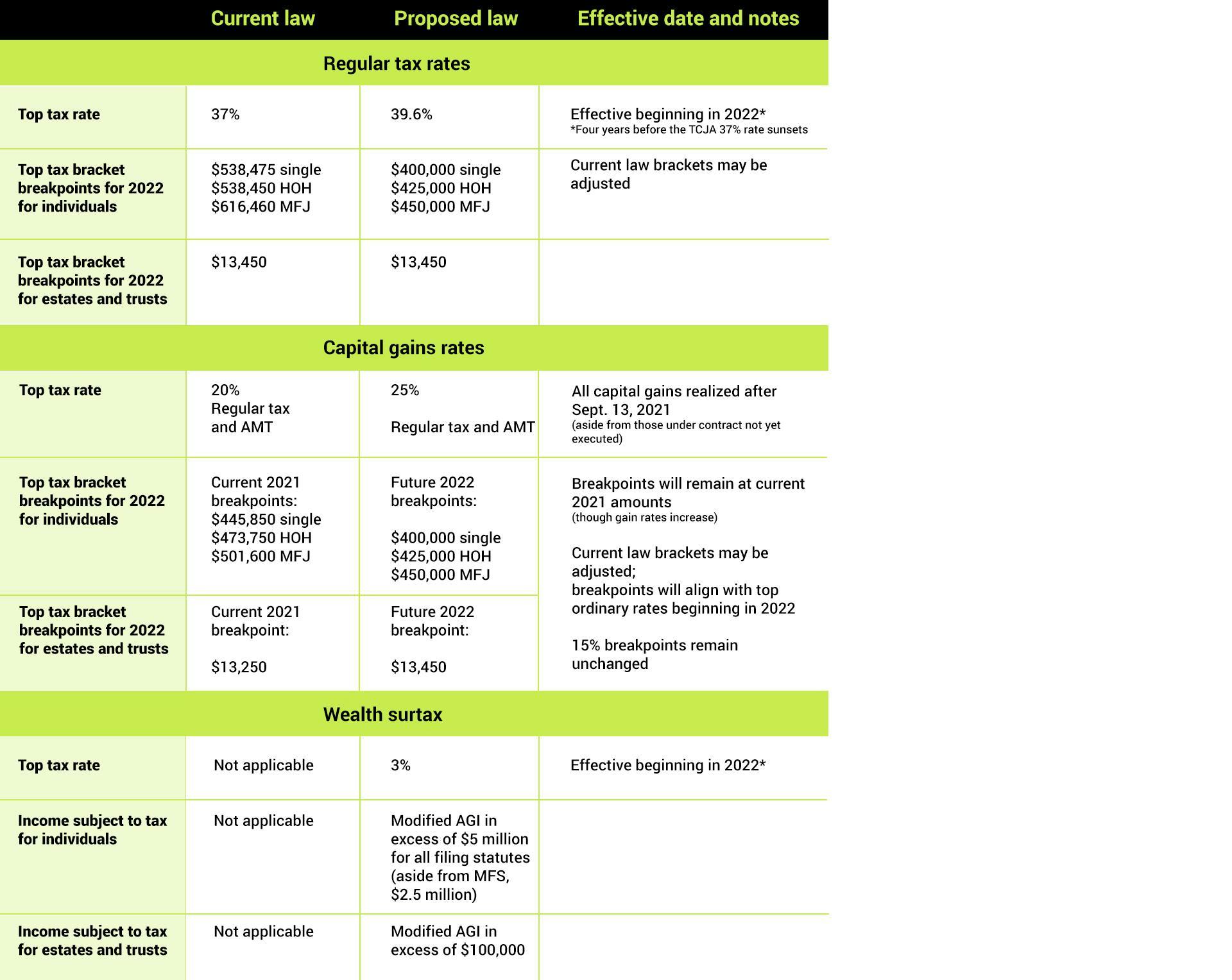
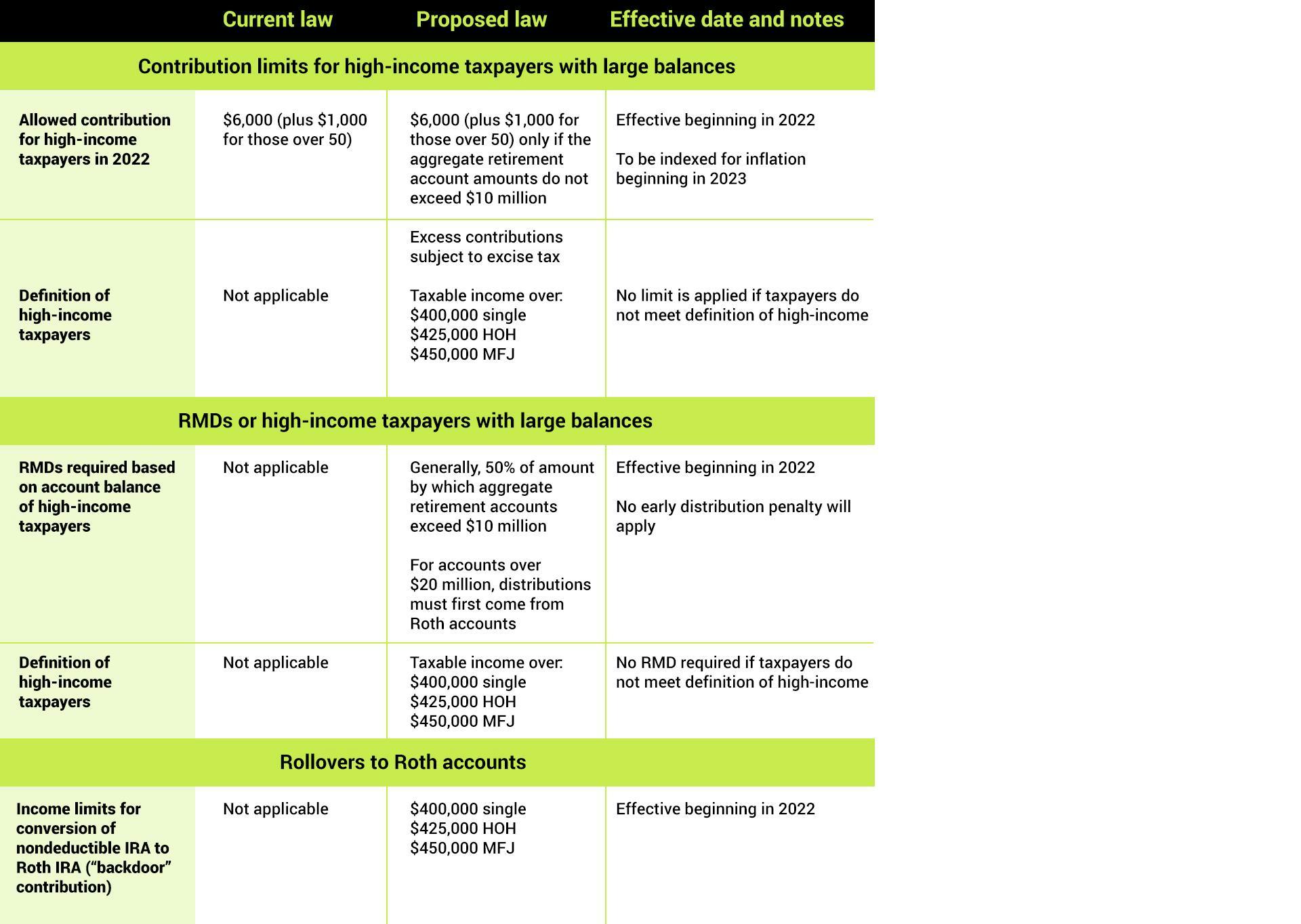
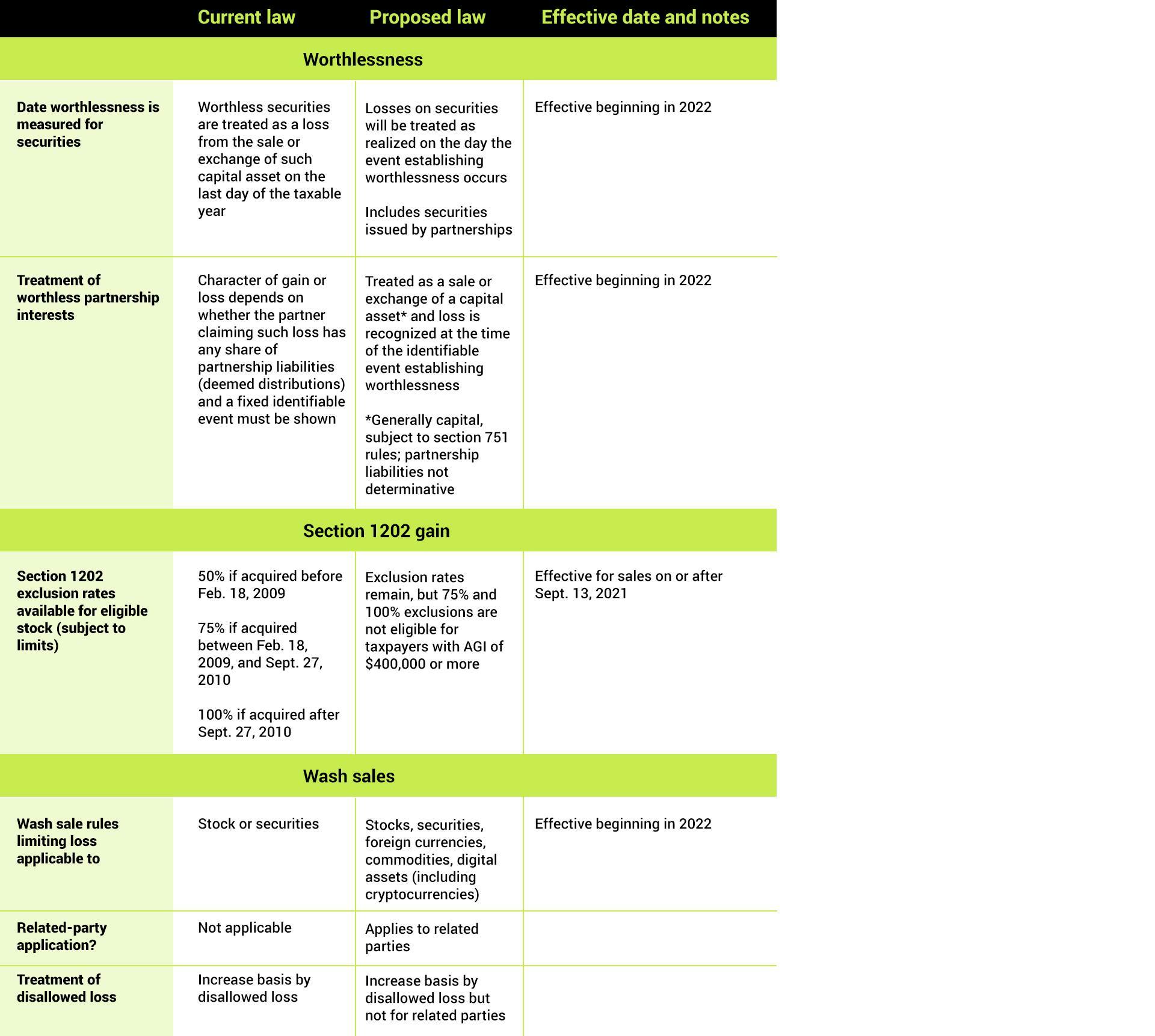
This week, the House Ways and Means Committee began discussing and marking up sweeping draft legislation that substantially modifies many provisions of the Tax Cuts and Jobs Act of 2017 (TCJA).
Changes are expected as the legislation moves through the reconciliation process. It is likely the Senate Finance Committee advances its own version as the Senate works through the budget process. Ultimately, both the House and the Senate will need to combine their respective bills to form one comprehensive package.
In addition to the House legislation, Senate Finance Committee Chair Ron Wyden, D-Ore., proposed a separate bill that would drastically alter partnership taxation, if enacted. Whether any of its provisions will end up in finalized legislation is currently unknown. However, given its potentially seismic effect, its most notable content is discussed below.
Finally, the House bill also includes sweeping international tax changes, which will be covered in an upcoming alert.
Likelihood of passage and timing
In August, Speaker of the House Nancy Pelosi agreed to bring the Senate-passed bipartisan infrastructure bill, outlined in our previous alert, to the floor for a vote by Sept. 27. Ideally, Democratic Party leaders would like to have reconciliation prepared and ready for a vote by that date, but that remains an aggressive timeline. The budget reconciliation process is complex, and many rules in the Senate will likely slow the process. Furthermore, there is little margin for disagreement given the slim majorities the Democrats hold in each chamber.
There are two notable moderate Democratic senators, Joe Manchin (West Virginia) and Kyrsten Sinema (Arizona), who have been vocally opposed to the target price tag of $3.5 trillion, and all 50 Democratic Senate votes will be needed for passage. Given there is not yet a consensus on the various proposals, plus the Senate is still developing its own bill (which will need to be reconciled with the House bill prior to final passage), this process could take until late in the year to be completed.
Actionable items?
You should be aware of these proposals for your own tax planning, but it is important to keep in mind that these are just that, proposals. There is no guarantee any of these will be enacted in their current format, if at all. Recall that the TCJA proposals in September 2017 were quite different, in many cases, to the final legislation that finally passed that December. While the capital gains rate increase would potentially have an effective date of Sept. 13, 2021, that does not mean it may not move to a different date. However, that should not be taken to mean that income should be recognized before the end of 2021 in advance of a potential rate increase. The tax cost should be only one component of an analysis. The ultimate question for an investor should be whether maintaining the investment makes economic sense for them.